You have seen the channels: an old film, cartoon, or TV episode plays continuously under a “24/7 LIVE” title. The obvious question is: can you stream movies on YouTube live and build the same kind of channel?
Only when you control the necessary rights, hold a license that covers the broadcast, or use a genuinely public-domain work and a clean public-domain print. Buying a DVD, paying for an OTT subscription, adding credits, cropping the picture, or placing your logo over it does not create streaming rights.
This guide gives creators a practical rights test. It is general information, not legal advice; if a film is commercially important or its ownership history is unclear, get jurisdiction-specific advice before broadcasting it.
The blunt answer: unlicensed movie streams are infringement
Rebroadcasting a full movie or TV episode without ownership, permission, or a valid legal exception is copyright infringement. It can lead to a live interruption, removal, copyright strikes, loss of live-streaming access, channel termination, and a claim from the rights holder outside YouTube.
YouTube says it scans all live streams for third-party content. A match can trigger a warning, a placeholder image, temporary interruption, or termination if the third-party material continues. A valid copyright removal request can also produce a strike. You can read the platform’s current explanation in YouTube’s copyright guidance for live streams.
A movie being available to watch is not the same as it being available for you to broadcast.
The 24/7 label changes nothing about permission. Nor does a small audience. Rights holders can use automated matching, manual reports, or formal takedown requests whether five people or five thousand people are watching.
The movie channels still visible usually fall into one of three groups: the rights owner is operating them, the operator has a license, or enforcement has not reached them yet. The third group is not a business model.
Why “but that channel does it” is not a defense
Search results create survivorship bias. You see channels that are live now; you do not see the streams that were blocked yesterday, the channels that lost live access, or the operators who quietly abandoned them after claims arrived.
A loop makes the exposure worse. Every cycle sends the same scenes, dialogue, soundtrack, and studio marks through the matching system again. Reframing the video, mirroring it, speeding it up, muting pieces, or adding a decorative border does not give you the underlying rights. Those edits can also make the viewer experience worse without solving the legal problem.
“Fair use” or “fair dealing” is not a magic label for an uninterrupted entertainment substitute. Copyright exceptions are fact-specific and differ by country. A review that uses limited clips for criticism is a different product from a channel that plays the whole film repeatedly so viewers need not obtain it from an authorized source.
Credit is not permission either. YouTube’s own Content ID dispute guidance says that giving credit or owning a copy is not, by itself, a valid reason to dispute a claim. A disclaimer such as “no copyright intended” has no licensing effect.
For a broader prevention framework, use the copyright checklist for 24/7 loops before uploading any catalogue.
The public-domain door and its traps
Public-domain films can support a lawful movie channel, but “old” and “public domain” are not synonyms. The answer depends on the work, publication history, country, and exact copy you plan to stream.
As of July 2026, the U.S. Copyright Office states that works published in the United States before January 1, 1931 are in the public domain. That includes U.S.-published works from 1930 or earlier, but it is a starting rule, not a universal database result. Foreign works, unpublished material, later versions, and complicated publication records require more research. The official U.S. duration circular explains why dates and publication status matter.
India uses a different clock for cinematograph films. Section 26 of the Copyright Act, 1957 provides a term of sixty years from the beginning of the calendar year following publication. The same Act preserves separate copyright in works embodied in a film. So an expired film right does not automatically answer every question about the screenplay, music, lyrics, artwork, or a particular recording.
The most common trap is the print itself. A distributor may restore a scratched film, create a new high-resolution scan, colourise it, add subtitles, commission a fresh score, or record new narration. The underlying film may be public domain while those new contributions remain protected. Audio inside an old print can also attract a separate match.
A five-step print check
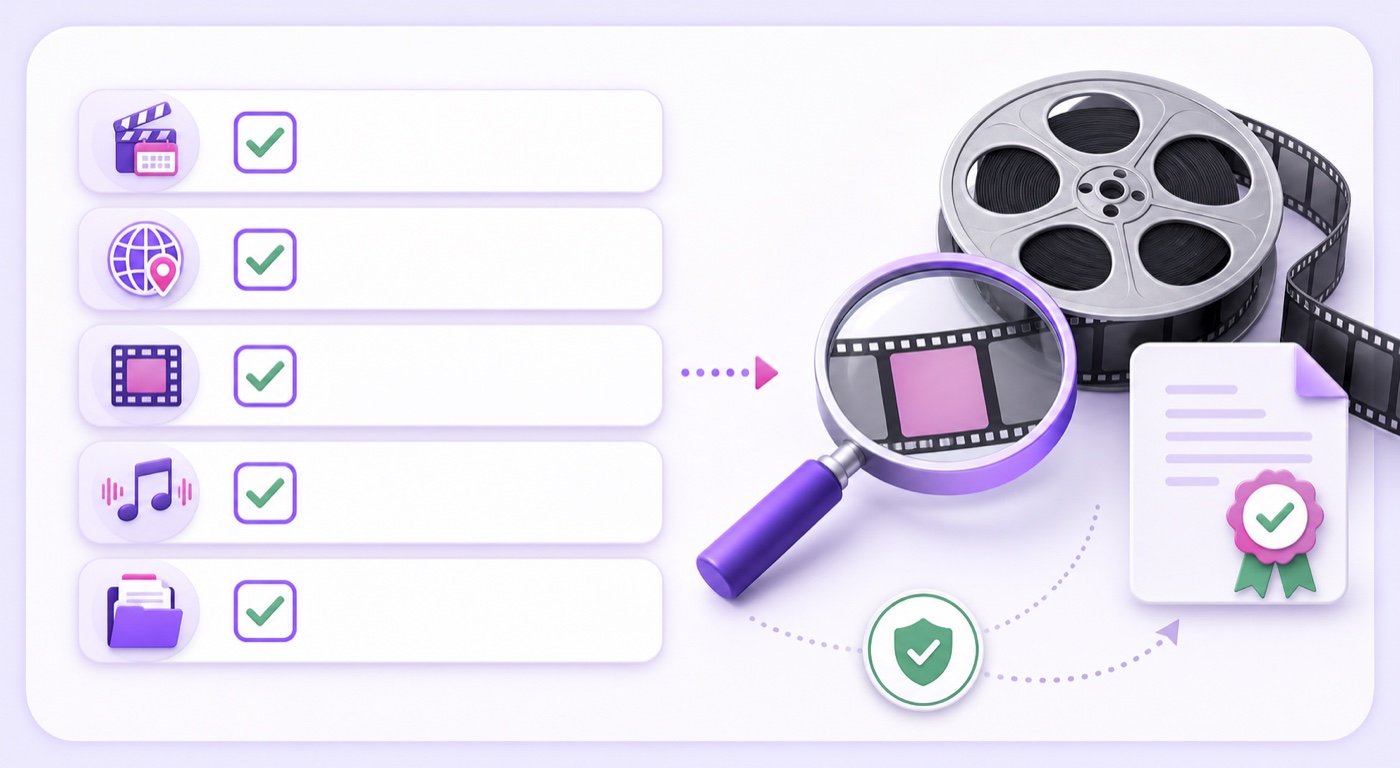
- Identify the exact title and release: record the original publication year, country, studio, and version—not just a filename from an archive site.
- Choose the relevant territories: check the law where the work originated and where you intend to make the stream available.
- Trace the exact file: note who scanned or restored it, where you obtained it, and what terms accompany that copy.
- Audit every layer: verify the picture, soundtrack, score, subtitles, dub, artwork, and any new introduction separately.
- Keep evidence: save source URLs, catalogue records, rights statements, correspondence, and dated screenshots in one folder.
A page saying “public domain” is evidence to investigate, not proof to accept blindly. Prefer government records, established film archives, and a documented chain back to the specific file. When the provenance is incomplete, leave that print out of a nonstop stream.
Licensed paths that actually exist
The cleanest route is content you produced and own. Keep performer releases, composer agreements, crew assignments, music licenses, and distribution contracts. “We made it” can still hide gaps if a freelancer retained rights or a stock asset license excludes broadcast use.
Licensing an independent catalogue is a realistic alternative. A regional filmmaker, animation studio, documentary producer, or film-school collective may welcome an always-on showcase, especially when the agreement defines promotion and revenue clearly. The permission should be written and signed; a friendly message saying “sure, share it” is too vague for a channel you plan to grow.
At minimum, the license should identify:
- the exact films, episodes, trailers, music, artwork, and subtitle versions covered;
- the platforms, countries, languages, and channel accounts allowed;
- whether continuous live streaming, looping, archiving, clips, and monetization are permitted;
- the start date, end date, renewal process, fee or revenue share, and termination procedure;
- who handles third-party claims and whether the owner will allowlist your channel in Content ID.
Allowlisting matters even when your contract is valid. YouTube warns that licensed third-party content may still interrupt a live stream if the rights owner has not added the licensed channel to its Content ID allowlist. Test the exact programme as an unlisted live event before promoting a public launch.
Commercial studio film and television rights are normally fragmented by territory, platform, language, and time window. A theatrical, television, OTT, educational, or home-video license does not automatically include a worldwide YouTube live loop. If a seller cannot state that the agreement covers your exact use, do not infer it.
What people build instead
You can keep the “always-on TV station” concept without borrowing someone else’s catalogue. The key is to design the schedule around assets with a clean rights trail.
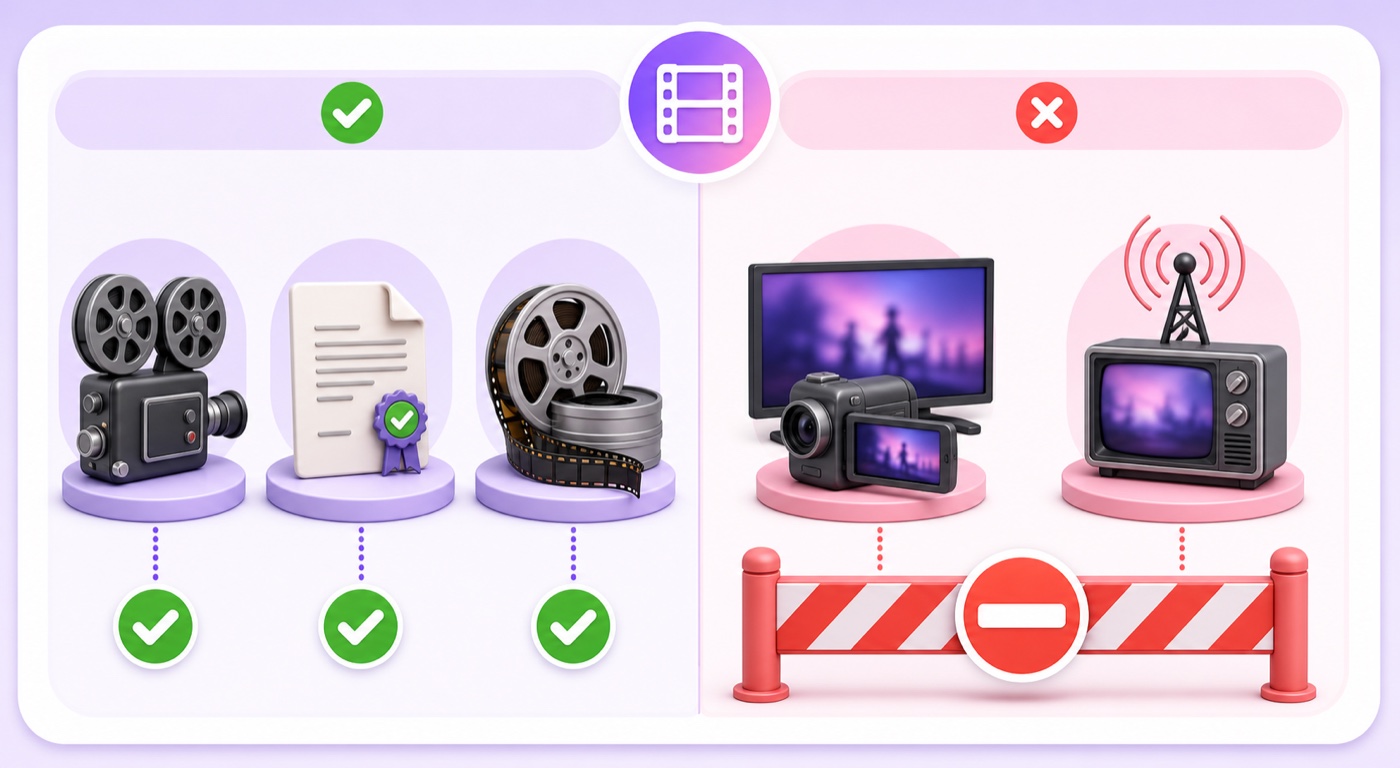
| Source | 24/7 use | What to keep |
|---|---|---|
| Your own shorts, films, or episodes | Yes, after clearing every included asset | Contributor agreements, releases, project files |
| Licensed indie catalogue | Yes, when the contract names live looping | Signed license, title schedule, invoices, allowlist confirmation |
| Verified public-domain film and print | Yes, within the territories you verified | Research notes, source records, exact master file |
| Commercial film, TV rip, DVD, or OTT capture | No without the required broadcast rights | A purchase receipt is not a broadcast license |
| Reviews and film-history talk without footage | Generally the lowest-rights route | Your script, voice recording, and licensed graphics/music |
A strong original station might rotate filmmaker interviews, behind-the-scenes segments, short films you commissioned, and licensed indie features. Another could present public-domain classics with your own introductions and clearly documented prints. A third could be a footage-free movie discussion channel: reviews, release-history stories, rankings, and listener call-ins using graphics you created.
That talk format follows the same safer logic as a rights-clean sports channel. See the old-cricket replay rights guide for a parallel example of replacing protected footage with original analysis.
StreamNeo requires users to own or hold the necessary licenses, rights, consents, and permissions for the content they submit. Once your catalogue passes that test, a cloud loop can keep the channel running without leaving a PC on. Review what YouTube allows for 24/7 looped streams, compare the current plans, then start free — 24-hour trial, no card.
If your channel already streams movies or TV
Stop adding more unlicensed material. Moving to a new stream key, renaming files, or swapping channels does not repair the rights problem. Preserve every notice and email, then open YouTube Studio → Content → Live → Restrictions and inspect each affected stream.
Separate a Content ID claim from a copyright strike before acting. They have different consequences and response paths; the claim-versus-strike guide for live streams walks through both. Do not dispute automatically. A dispute should rest on real ownership, a license, a valid exception, or a genuine identification error.
If a strike was applied, deleting the video usually does not clear it. Follow the options in the official notice, and consider qualified legal advice before sending a counter-notification because that is a legal process. If there is no defensible rights basis, the durable move is to pivot now: remove unlicensed titles from the future schedule and rebuild around owned, licensed, or thoroughly verified public-domain material.
More from the journal: Stream Key Rotation on a 24/7 Channel: When It Breaks You and How to Plan It · Your 24/7 Stream Died Overnight: The 3AM Failure Checklist · What a 24/7 Stream Is Worth to a Small Business Beyond Ad Revenue
FAQ
Can I stream a movie if I credit the studio?
No. Credit identifies the owner; it does not grant a broadcast license. You still need ownership, permission covering the live use, or a valid legal exception.
Are old movies automatically safe?
No. Verify the work’s status in each relevant jurisdiction and the exact print you will stream. Restorations, remasters, new scores, subtitles, and other added elements can carry separate rights.
What’s the legal version of a movie channel?
Build it from films you made, indie titles licensed in writing for continuous live use, or public-domain works with verified clean prints. Footage-free review and movie-history talk is another practical route.