The straight answer
No: YouTube’s current published rules do not contain a blanket ban on sending content you own, or are licensed to use, as a continuous loop. That does not make every loop safe. The stream, its metadata, the channel’s behavior, and any attempt to monetize it still have to satisfy the rules that apply to every other YouTube video.
That conclusion comes from reviewing YouTube’s current live-stream terms, live-stream restriction guidance, copyright guidance, spam policy, and monetization rules. The live-stream terms focus on Community Guidelines compliance and having all necessary rights. The restriction page lists causes such as strikes, copyrighted live-broadcast matches, and other guideline violations; it does not list looping your own recording as a standalone violation.
So the useful question is not simply, “Are looped live streams allowed?” It is: “What exactly am I looping, how am I presenting it, how is the channel operating, and am I also asking YouTube to monetize it?” Those four questions lead to four different policy buckets.
| Policy bucket | What creates the risk | What can happen |
|---|---|---|
| Copyright | Music, footage, art, or broadcasts you do not have rights to use | Interruption, termination, a claim on the archive, or a strike |
| Deceptive presentation | Metadata or visuals that materially mislead viewers about what they will see | Removal, a warning or strike, monetization action, or account action |
| Spam and manipulation | Mass-produced channel networks, artificial engagement, scraped content, or malicious clickbait | Content removal, monetization suspension, strikes, or termination |
| Monetization eligibility | Generic, repetitive, mass-produced, or minimally transformed programming | YPP rejection or loss of monetization even when the stream itself stays available |
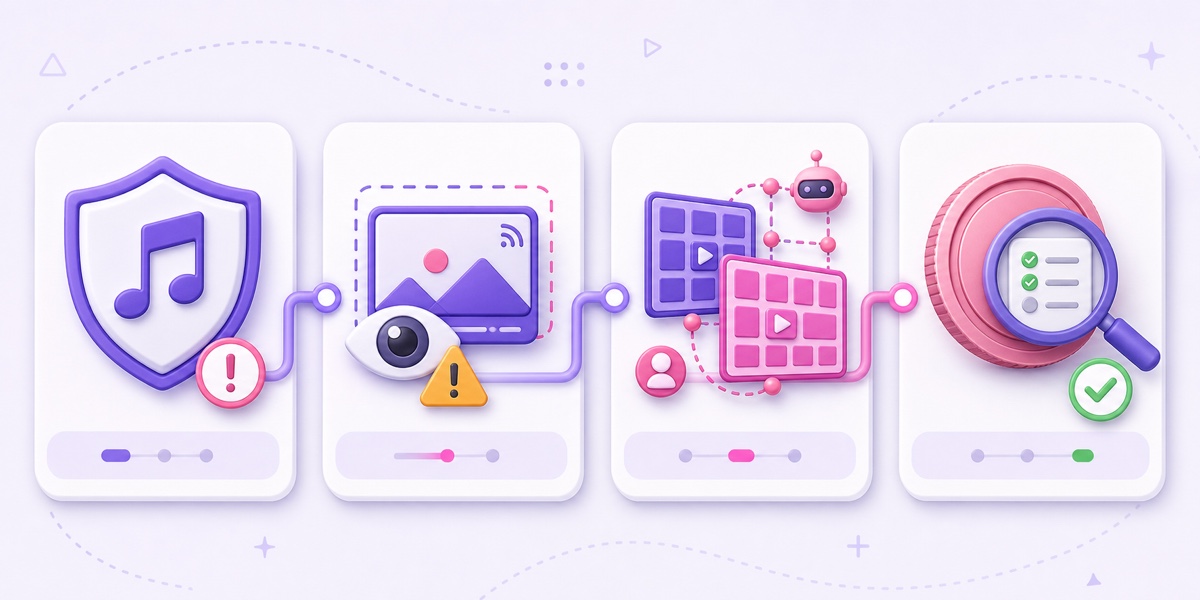
The categories overlap, but they are not interchangeable. A copyright match is not automatically a spam violation. A YPP rejection is not the same as a channel ban. Much of the panic around 24/7 streams comes from collapsing every negative outcome into one dramatic headline.
Reason channels actually die #1: copyright
Owning the exported MP4 is not the same as owning every element inside it. A devotional recording may include a composition, backing track, stock image, temple footage, or performer’s recording controlled by someone else. A lo-fi mix may contain samples or licensed tracks registered in Content ID. A gaming replay may include music whose streaming rights are separate from the game footage.
YouTube says active live streams are scanned for matches to third-party content. Its copyright guidance for live streams explains that a matched stream may show a placeholder, be interrupted, or be terminated if the third-party material continues. It also warns that licensed material can still interrupt a broadcast when the rights owner has not added the creator’s channel to its Content ID allowlist.
Looping increases practical exposure because the same questionable segment returns over and over. It does not create a new kind of copyright law; it simply keeps rebroadcasting the material that can trigger enforcement. Keep the license, invoice, territory, platform rights, and validity period for every non-original asset. If a match appears, remove the affected item from rotation and investigate instead of letting it cycle again. For the full response path, read the honest guide to copyright strikes on 24/7 loops.
This is operational policy guidance, not legal advice. If your rights depend on fair use, a disputed contract, or a country-specific exception, get advice appropriate to your situation before broadcasting around the clock.
Reason #2: deceptive practices
A recorded program can be honestly presented as a live stream without pretending the underlying event is happening right now. Problems begin when the title, thumbnail, description, graphics, or narration creates a material false impression. YouTube’s spam policy prohibits misleading viewers to boost engagement and specifically identifies maliciously misleading titles, thumbnails, descriptions, or imagery.
Consider recorded darshan. “24/7 Shiva Darshan Replay • Recorded at [temple] on [date]” tells viewers exactly what they are receiving. “LIVE from the temple right now” is misleading when the footage was recorded last year and no current feed exists. The same rule of thumb applies to a recorded market update, weather event, news briefing, product launch, or sports replay.
In the official YouTube pages reviewed for this article, we did not find a general rule requiring every pre-recorded YouTube live stream to carry the words “pre-recorded.” That absence is not a license to mislead. A clear replay note in the title or description is cheap insurance, helps viewers trust the channel, and becomes especially important when timing changes the meaning of the footage. The recorded temple darshan guide shows how to handle that distinction in a high-trust niche.
Reason #3: spam signals
One creator running one useful channel from a rights-cleared library is different from a channel farm publishing near-identical loops at scale. YouTube’s current spam policy applies to coordinated networks of channels and calls out artificial engagement, automated or synthetic mass-production, scraped content, detection evasion, and malicious clickbait. It also says a few legitimate variations are different from flooding the platform with repetitive material.
The safe line is behavioral, not a magic channel count. Do not buy views, subscribers, comments, or watch time. Do not run sub-for-sub schemes. Do not post templated live-chat messages across other channels. Do not mirror, crop, pitch-shift, or speed up somebody else’s material to evade matching. Do not launch dozens of nearly identical channels whose only purpose is capturing more search slots.
A stronger approach is to make one channel worth returning to. Curate a coherent library. Refresh recordings. Add useful chapter cues, scheduled segments, original introductions, moderation, or timely commentary where the format supports it. Keep titles and thumbnails specific to the actual program. Those choices build a real viewer experience rather than a mechanical distribution footprint.
Reason #4: monetization is not the same as existence
This is the biggest source of confusion. A stream may comply with Community Guidelines and remain watchable while still failing YouTube Partner Program review. YouTube evaluates monetization under a separate set of rules, and its channel monetization policy explicitly says the review covers live streaming as well as long-form videos and Shorts.
In July 2025, YouTube renamed its “repetitious content” policy to “inauthentic content” and clarified its focus on repetitive or mass-produced material. The current guidance says monetized content should be original and authentic, not generic, repetitive, mass-produced, or manipulative. It also treats reused content as a separate monetization issue: permission from the original creator may solve a rights question but does not automatically demonstrate enough original value for YPP.
That means three outcomes must stay separate:
- The stream can exist: it follows platform rules and clears the required rights.
- The stream can be monetized: the channel also satisfies YPP’s originality, authenticity, and value standards.
- The channel can remain in good standing: its broader conduct avoids strikes, spam, manipulation, and repeated violations.
Added commentary or creative editing can strengthen a program, but there is no guaranteed transformation score. Reviewers examine the channel as a whole, including its main theme, most-viewed and newest videos, watch-time concentration, metadata, and About section. See the complete 24/7 loop monetization guide before building a revenue forecast.
What safe-and-solid looks like
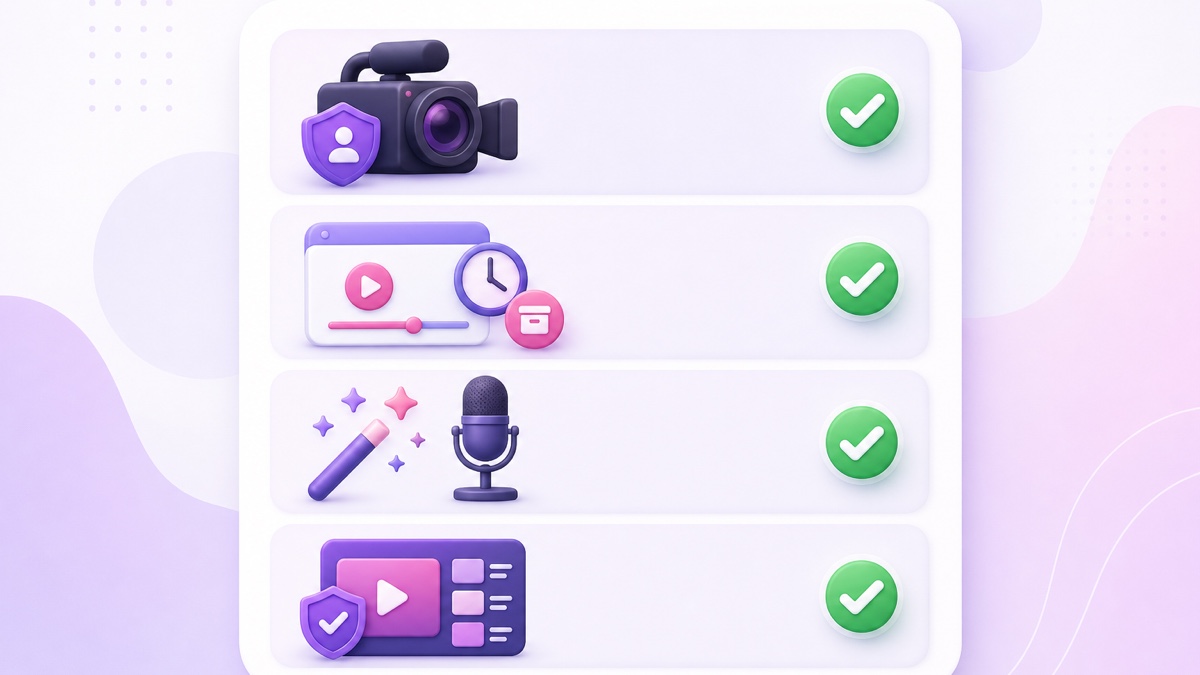
A durable loop channel is built like a small broadcaster. Rights are cleared before airtime, the program promise is honest, the library has an editorial reason to exist, and channel operations are designed for viewers rather than for exploiting a metric.
- Trace every asset. List each video clip, song, recording, image, font, and performance. Mark it as owned, commissioned, licensed, or public domain, and store the proof. Confirm that the license covers live streaming, the relevant platforms, territories, and commercial use if you plan to earn revenue.
- Describe the program accurately. Match the title and thumbnail to the real content. When viewers could reasonably mistake an old event for a current one, state that it is a replay and include the recording date.
- Add genuine viewer value. Use original curation, transitions, host segments, commentary, programming blocks, refreshed recordings, or useful on-screen information. Do not add superficial edits merely to disguise copied content.
- Operate one good channel before scaling. Build a recognizable schedule and audience. Avoid cloned metadata, duplicate channel networks, and any purchased or exchanged engagement.
- Audit the live output. Watch from a logged-out device, monitor YouTube Studio for restrictions or warnings, keep contact details current, and re-check policy pages before major format changes.
A loop is a delivery method, not a compliance shortcut. The content and the behavior around it still carry the policy risk.
Before connecting an encoder, complete the normal setup in the step-by-step pre-recorded YouTube live guide, then run the five checks above against the exact file you will broadcast.
Facebook’s equivalent rules, briefly
Do not assume a YouTube-safe loop is automatically suitable for Facebook Live. Facebook’s current Live policies are more explicit: pre-recorded content in a broadcast must be clearly marked as pre-recorded, the service must not be used to misrepresent old footage as happening in real time, and Facebook Live should not be used to broadcast looping videos such as one clip repeated continuously.
That is a meaningful platform difference, not a wording detail. If Facebook is part of your plan, design a format that follows its current Live policy instead of copying the YouTube loop unchanged. Review the Facebook pre-recorded live setup guide and check the policy again immediately before launch, because platform rules and product behavior can change.
StreamNeo exists for creators broadcasting content they own or are authorized to use. Once your rights and format are cleared, compare the available plans or start free — 24-hour trial, no card.
More from the journal: 4K 24/7 Streaming: What It Really Costs in Bitrate and Sanity · Demonetisation on a 24/7 Channel: Every Trigger and the Recovery Path · Sponsored Lower-Thirds and Tickers on a 24/7 Loop Without Breaking Policy
FAQ
Will YouTube ban my channel for looping?
Not merely because your encoder repeats content you own or are licensed to stream with honest metadata. The real risks are copyright violations, deceptive presentation, spam or manipulation, and separate monetization standards. YouTube can still remove content, restrict live access, issue strikes, or terminate channels when those underlying policies are violated.
Do I have to disclose that the stream is pre-recorded?
For YouTube, the official pages reviewed for this article did not state a blanket requirement to label every pre-recorded live stream. Honest labeling is still the sensible practice whenever viewers might believe an old event is happening now. Facebook is different: its Live policy explicitly requires pre-recorded content to be marked.
Can looped streams be monetized?
Potentially, but monetization is a separate review with stricter originality and authenticity standards. Owning the content does not guarantee YPP approval, and low-value repetitive or mass-produced programming can be rejected or demonetized. Read the full monetization breakdown for the channel-level review factors.