Yes, a 24/7 looped stream can be monetized on YouTube. But running continuously, collecting watch hours, or owning a commercial license does not guarantee approval.
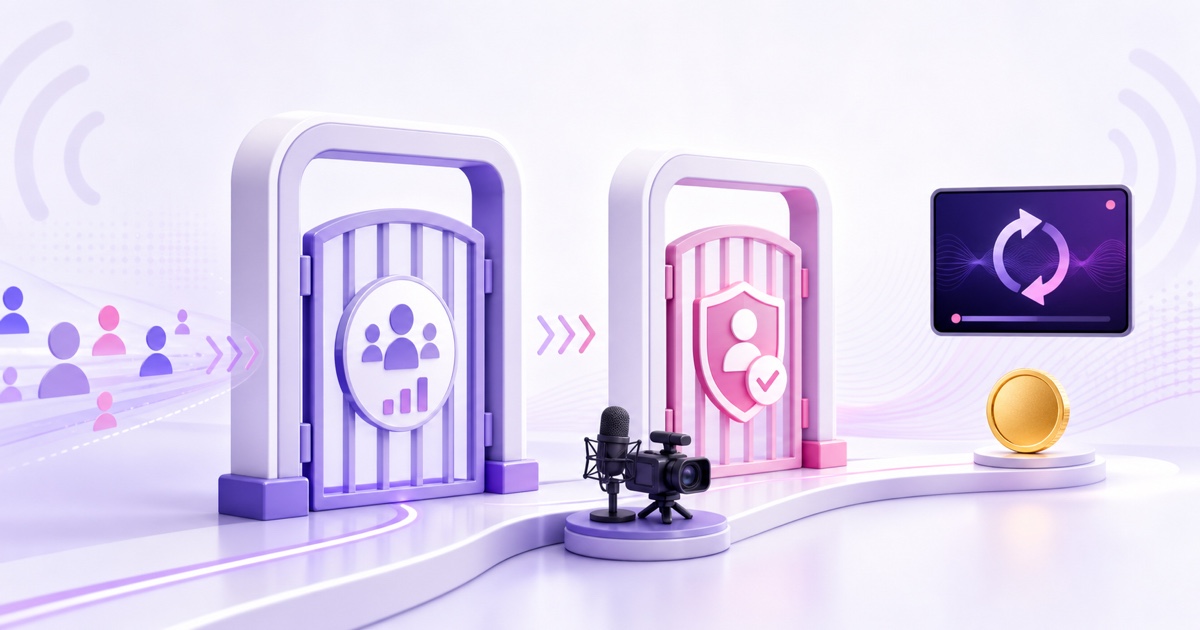
The useful way to think about monetization is as two gates. First, your channel becomes eligible to apply. Then YouTube reviews whether the channel is original, authentic, and suitable for the YouTube Partner Program (YPP). Looped channels often focus on the first gate and get surprised by the second.
This guide explains what reviewers look for, how to make your creative contribution visible, and which revenue paths remain available before YPP. It is policy guidance, not a promise that any particular channel will pass review.
The two gates: eligibility first, review second
Gate 1 is numerical eligibility. For ad-revenue sharing, YouTube currently lists two main routes: 1,000 subscribers plus 4,000 valid public watch hours in the previous 12 months, or 1,000 subscribers plus 10 million valid public Shorts views in the previous 90 days. A horizontal public live stream can contribute to the watch-hours route, provided its hours are valid under YouTube's rules. You can see the current status for your channel in YouTube Studio → Earn.
An always-on stream can create more opportunities for viewing, but it does not manufacture approval. Read the practical math in how 24/7 streams earn watch hours, and verify the latest thresholds on YouTube's official YPP eligibility page.
Gate 2 is channel review. After you accept the relevant terms and connect AdSense for YouTube, automated systems and human reviewers assess the channel as a whole. They may examine the main theme, most-viewed and newest videos, the content responsible for the largest share of watch time, metadata, and the About section. Crossing Gate 1 makes you eligible for that review; it does not make the decision automatic.
This distinction answers the headline question accurately: loops can be monetized, but the loop is only a delivery method. Reviewers care about what is inside it, how it was made, and whether your channel demonstrates a real creative contribution.
The policy that decides it
YouTube's current umbrella standard is that monetized content should be original and authentic. On 15 July 2025, YouTube renamed its former “repetitious content” policy to inauthentic content to clarify its treatment of repetitive or mass-produced work. YouTube also says that this rename did not change its separate reused-content policy.
That distinction matters. Inauthentic-content rules address generic, mass-produced, repetitive, or template-driven channels whose videos offer little variation or value. Reused-content rules address material taken from YouTube or another online source without significant original commentary, substantive modification, or educational or entertainment value. Both standards can affect a loop channel, and both are explained on YouTube's channel monetization policies page.
Nothing in that policy says that repeating a creator's own video automatically blocks monetization. The risk rises when the underlying material is interchangeable, minimally changed, copied, or difficult to attribute to the channel owner. A single carefully produced ambience film repeated for continuous listening is not the same creative proposition as dozens of near-identical stock clips exported from one template.
Review is channel-wide. A polished original live stream may not rescue a library dominated by copied compilations. Conversely, a consistent catalog of creator-recorded audio, behind-the-scenes uploads, edited episodes, and accurate credits gives a reviewer more evidence of how the work was made.
What added value concretely means
“Added value” should be visible and specific. Start with material you created: a bhajan you performed and recorded, rain you captured on location, a lo-fi track you composed, a meditation you narrated, or an animation you designed. Keep the project files, raw takes, license receipts, performer releases, and editing timelines that show your process.
When third-party material is involved, a license answers a copyright question; it does not automatically answer YouTube's reused-content question. YouTube explicitly treats reused-content review separately from copyright enforcement. Permission may let you use a clip while the channel still fails to show enough original participation or transformation.
| Riskier presentation | More defensible presentation |
|---|---|
| One stock rain clip repeated unchanged | Your own location recordings, edited into a deliberate sound journey |
| A playlist of other artists' songs, even with permission | Music you composed, performed, produced, and documented |
| Downloaded clips with a color filter and logo | A narrated compilation with a clear story, analysis, and substantive editing |
| Many channels generated from the same template | One coherent channel with distinct episodes and a recognizable creative voice |
| Vague credits such as “no copyright” | Accurate ownership notes, licenses, contributor names, and source records |
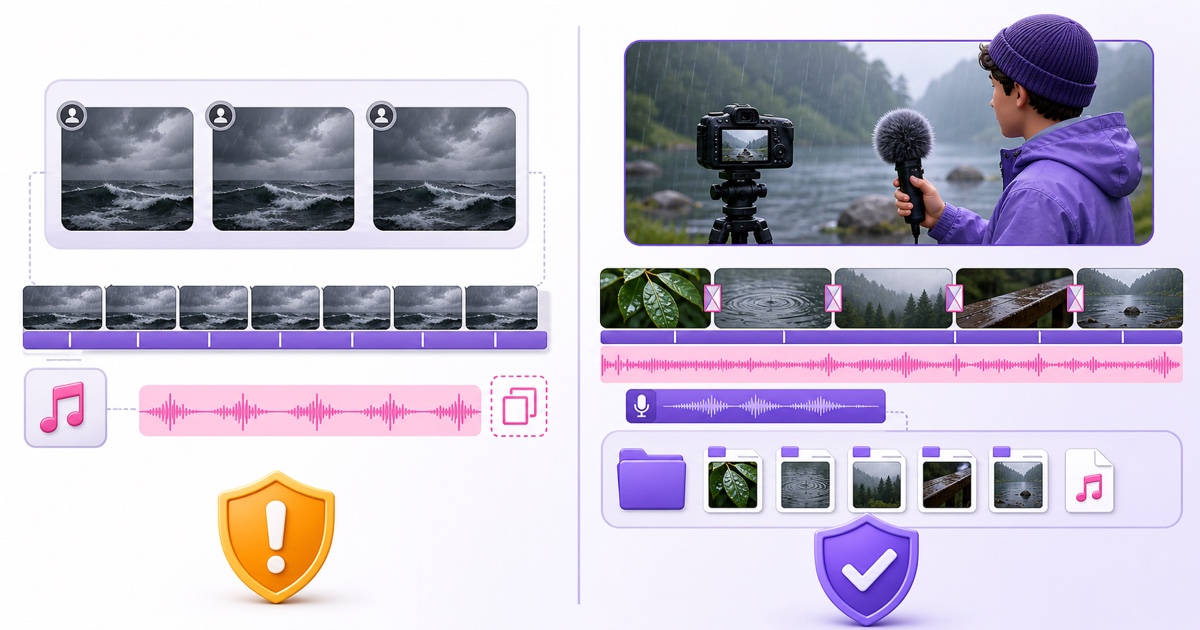
Commentary is one strong form of added value, but it is not the only one. Original cinematography, sound design, composition, performance, teaching, animation, and meaningful curation can all demonstrate authorship. The important test is not whether you added an overlay; it is whether viewers and reviewers can recognize a material creative difference.
Use the same standard across the whole channel. Publish a short making-of video, explain your recording setup in descriptions, and show genuine variation between programs. These are not loopholes. They are honest evidence of the work that already exists.
If YPP says yes: the live money menu
Ads on the live stream
For an eligible, monetized channel with monetization enabled on the stream, YouTube may serve pre-roll, mid-roll, and display ads. Mid-rolls can be automatic or manually inserted; current controls live under YouTube Studio → Create → Go live → Edit → Monetization. Ad delivery is not guaranteed, and different viewers may see different ad experiences. The official live-stream monetization guide describes the controls; our live ad placement guide explains the always-on decisions.
On a loop, aggressive interruptions can work against the reason people tuned in. A sleep stream, study room, prayer session, or continuous music experience needs restraint. Revenue controls should support the viewer experience, not turn the stream into an ad timer.
Super Chat and Super Stickers
Eligible channels can enable Supers for eligible public live streams when live chat is available. A 24/7 chat box, however, is not automatically a community. Pinned prompts, scheduled host check-ins, moderation, and visible acknowledgements give people a reason to participate. Supers are unavailable on some stream types, including unlisted, private, age-restricted, and made-for-kids videos.
Channel memberships
Memberships exchange recurring payment for ongoing perks, so the offer needs more than access to the same endless loop. Useful benefits include member voting on the next ambience, downloadable tracks you own, production notes, members-only sessions, or a regular live Q&A. Availability and eligibility vary, and some music channels face additional restrictions. See the practical playbook for Supers and memberships on always-on streams.
Money that needs no YPP
A declined or not-yet-eligible channel is not limited to waiting. Three off-platform paths can fit a niche loop, ordered roughly from lighter to heavier operational work.
- Affiliate links. Recommend tools or products you genuinely use, such as a microphone, sleep mask, study lamp, or music software. Disclose the affiliate relationship clearly and avoid stuffing the description with unrelated offers.
- Sponsorships. A niche audience can be relevant to a suitable brand even before YouTube shares ad revenue. The work is heavier: you must pitch, agree on deliverables, label the promotion correctly, and protect audience trust. A short sponsor slate should not pretend to be part of the original program.
- Your own product, course, or service. A meditation creator might offer a paid guided session; a producer might sell original sample packs; a teacher might offer a course; a consultant might use an educational loop to introduce a service. This requires fulfillment, support, and a real offer, but it gives the creator more control.
Format the stream as the top of a useful funnel rather than a passive coin machine. A podcast library can become a 24/7 live radio channel, while an owned webinar catalog can become an always-on lead channel. None of these paths guarantees income; each works only when the audience, offer, rights, and disclosure fit.
Your pre-application playbook
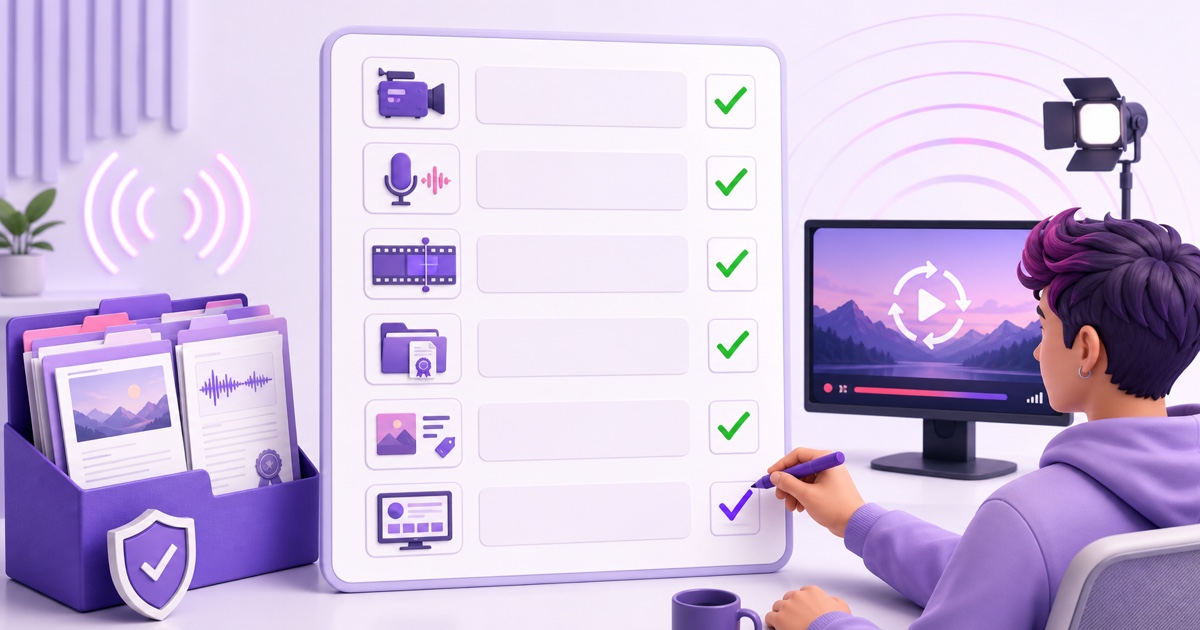
- Audit the channel, not just the live URL. Review the videos driving the most watch time, the newest uploads, titles, thumbnails, descriptions, About section, and playlists. Remove misleading claims and make the channel's creative identity coherent.
- Prove where the content came from. Organize raw camera files, recording sessions, project timelines, contracts, licenses, invoices, and contributor permissions. Read the separate guide to copyright strikes on 24/7 loops; rights compliance and monetization originality are related but distinct checks.
- Run the originality test. Ask: Could a reviewer tell what I filmed, performed, wrote, narrated, or edited? Would several uploads feel interchangeable after a few minutes? Does every program give viewers a real reason to choose this channel?
- Fix the weakest evidence. Replace generic source material, add genuine narration or teaching where it improves the program, publish varied original episodes, and document the production process. Cosmetic filters, speed changes, borders, and logos are not substantive transformation.
- Check metadata honestly. Do not label a recording as a live camera, claim ownership you do not have, or hide contributor information. Use descriptions to explain the format, your role, and any licensed elements plainly.
- Apply through the official path. Go to YouTube Studio → Earn → Apply Now, accept the base terms, and link an active AdSense for YouTube account. Review can consider the channel as a whole.
If your first YPP application is rejected, YouTube currently says you can reapply after 30 days. After a later rejection or previous reapplication, the wait is 90 days. If you believe the decision is wrong, YouTube says you can appeal within 21 days. Read the rejection reason before choosing a path: an appeal argues that the current channel already complies, while a reapplication gives you time to make real changes. YouTube's rejection FAQ contains the current timing.
Streaming software does not decide Gate 2. StreamNeo can keep creator-supplied media broadcasting without leaving a home computer on, but it cannot turn borrowed or low-effort content into original work. Your authorship, rights, channel history, and viewer value remain the deciding evidence.
The honest summary
Loops can be monetized. Low-effort loops often are not. The practical difference is documented originality: work viewers can value and reviewers can trace back to you.
Build the content and rights trail first. Then choose infrastructure for reliability, not as a shortcut around policy. When your original loop is ready, review StreamNeo pricing or start free — 24-hour trial, no card.
More from the journal: 4,000 Watch Hours With a 24/7 Stream: The Honest Timeline · Ad Breaks on an Always-On YouTube Stream: Manual, Automatic and Pre-Roll · Ad Revenue on a Regional-Language 24/7 Channel in India
FAQ
Will YouTube monetize a music loop?
It can, if the channel passes YPP review and the music demonstrates genuine originality and cleared rights. Music you composed, performed, and documented is easier to attribute to you. A minimally changed collection of other artists' songs can fail reused-content review even when you have permission, because copyright permission and YPP originality are separate questions.
Can I earn before YPP?
Yes. Affiliate links, direct sponsorships, and your own products or services do not require YouTube ad-revenue sharing. They still require honest disclosures, proper rights, policy-compliant content, and an offer that matches the audience. Revenue is never automatic simply because a stream is always on.
Do mid-rolls work on live streams?
Yes, eligible monetized live streams can use automatic or manual mid-roll ads. YouTube does not guarantee that an ad will serve to every viewer, and creators should balance ad frequency against the purpose of the stream. See the linked live-ad guide for eligibility, placement, and current controls.