A cricket highlights live stream looks like an easy channel idea: find memorable matches, cut the best moments, and repeat them all day. The problem is that the excitement, age, or easy availability of a clip does not give you the right to rebroadcast it.
The safer opportunity is still attractive. You can build an always-on cricket channel around reporting, analysis, original graphics, interviews, or matches you are genuinely authorised to film. This guide separates that workable business from the shortcut most likely to end in claims, takedowns, or strikes.
The hard truth: old match footage is not free footage
Do not loop television highlights, downloaded match clips, screen recordings from a streaming app, or footage copied from another channel unless you have a licence that specifically covers your use. A ten-year-old World Cup clip is not free simply because the match is over, the official replay is difficult to find, or many fan accounts have reposted it.
Cricket broadcasts can carry several overlapping rights: the broadcast signal, the recorded audiovisual production, commentary, graphics, music, and other creative elements. In India, for example, Section 37 of the Copyright Act gives a broadcasting organisation a broadcast reproduction right lasting 25 years from the beginning of the calendar year after the broadcast. Other rights in the recorded programme can have different owners and terms. That is why the expiry of one right would not automatically clear a clip for reuse.
Simple rule: if the pictures came from a television network, official app, rights-holder feed, or somebody else's upload, assume you cannot run them as your replay channel without written permission.
This is practical publishing guidance, not legal advice. If a proposed use depends on a copyright exception or a contract interpretation, take the exact clip and plan to a qualified lawyer before publishing.
Why cricket footage is a particularly dangerous shortcut
For a broadcaster or cricket board, the match feed is not background decoration; it is the product licensed across territories, languages, platforms, and time windows. A continuous replay can substitute for an authorised highlights service. Repeating the clip also keeps presenting the same protected material to platform detection instead of limiting the exposure.
YouTube says that all live streams are scanned for third-party content, including another live broadcast. A detected match can trigger a warning or placeholder, and continued matching can interrupt or terminate the stream. A rights holder can also send a copyright removal request. That legal takedown is different from a routine Content ID claim and can produce a channel strike; this claim-versus-strike guide explains the response paths.
Mirroring the picture, cropping the scoreboard, changing the speed, adding a border, or writing “no copyright intended” does not create permission. Neither does buying a consumer subscription: access to watch a service is not normally a licence to republish its feed.
Commentary over the footage is not an automatic safe harbour
Commentary, criticism, and review can matter in a copyright analysis, but putting your voice over long or decisive passages of a match does not automatically make the use lawful. YouTube's own fair-use guidance says courts decide US fair use case by case, considering purpose, nature, amount used, and market effect. It also warns that adding original material may still not qualify.
India uses fair-dealing exceptions rather than the same US test. Section 52 covers limited uses including criticism, review, and reporting current events, but “I am analysing it” is not a blanket licence for a 24/7 highlights loop. Laws also differ by country. Treat footage-led commentary as a legal question, not a content hack.
What cricket content can you actually stream?
Build from assets you control. Your original narration, interviews, analysis, layouts, and recordings can form a useful channel without showing a single frame from a protected broadcast. If footage is essential, get a written licence and check its territory, term, platform, live-streaming, replay, editing, and monetisation permissions.
| Content idea | Default answer | What makes it usable |
|---|---|---|
| Television or app match highlights | Do not stream | A written licence from the relevant rights owner covering your exact live/replay use |
| A compilation downloaded from fan channels | Do not stream | Permission from the underlying rights owners, not merely the uploader |
| Your commentary over continuous match footage | High risk | Specific legal advice or a footage licence; commentary alone is not automatic protection |
| Retro ball-by-ball discussion with no match audio or video | Generally workable | Your script, voice recording, and cleared music or sound effects |
| Statistics and graphics you create | Generally workable | Rebuild the visual design yourself, cite reliable data sources, and respect database terms |
| Interviews you record | Generally workable | Recorded consent defining publication, editing, replay, and commercial use |
| Local matches you film | Workable with permissions | Written approval from organisers and venue plus appropriate participant releases |
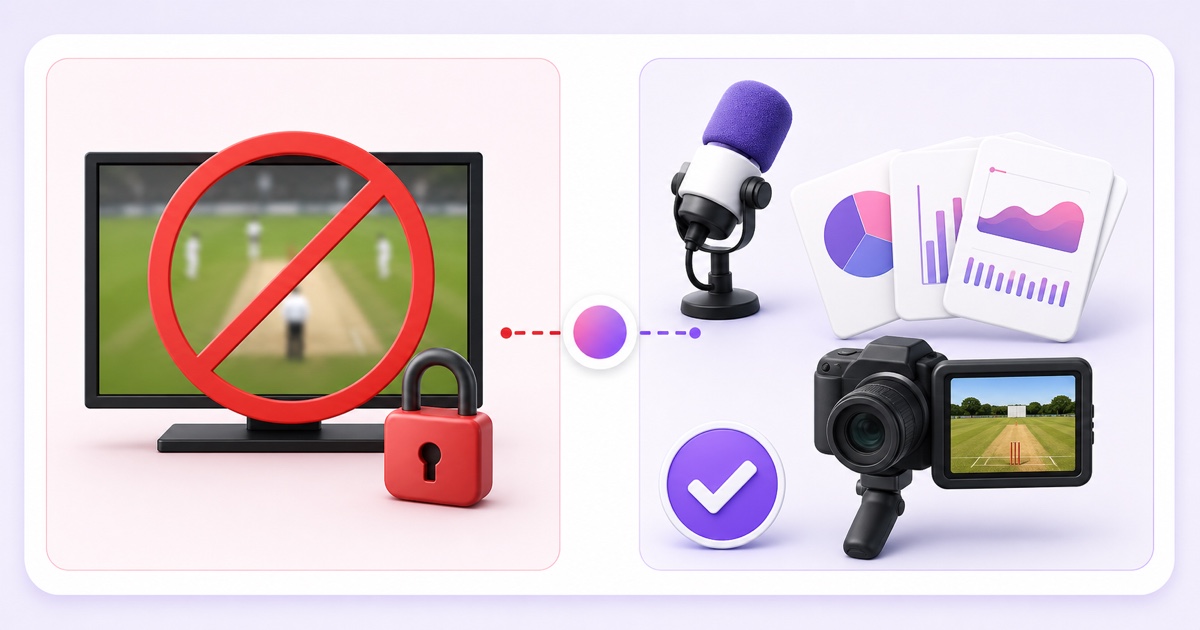
Facts such as a score are different from copying a broadcaster's scoreboard animation, commentary track, database, or graphic package. Research the facts, cite the source, and design your own presentation. The same ownership discipline applies to music: a familiar stadium song can create a separate claim even when every visual is yours.
A compliant 24/7 cricket channel blueprint
The strongest alternative is a cricket-talk station: modular programmes that can be refreshed without relying on match footage. Think radio with original visual support, not television with borrowed pictures.
- Choose a narrow promise. Examples include “this day in cricket history,” tactical explainers for club players, domestic-cricket roundups, captaincy debates, or regional-language cricket stories.
- Write reusable segments. A practical starter library could contain six to ten segments of 8–15 minutes each. Use a clear opening, one question or story, original analysis, and a sign-off that still sounds natural when the next segment begins.
- Record your own audio. Use your voice, commissioned voices with a written usage agreement, or recorded interviews with consent. Remove broadcast commentary, crowd audio lifted from matches, and uncleared music.
- Create a visual layer you own. Combine presenter video, self-designed scorecards, timelines, maps, diagrams, and generic cricket illustrations. Label old stories clearly so viewers never mistake a replay discussion for a current match.
- Prepare a clean loop. Export consistent MP4 files using H.264 video and AAC audio. Keep resolution, frame rate, and audio settings uniform so transitions do not create avoidable stream-health problems.
- Publish honestly. In YouTube Studio, use Create → Go live → Stream, create or select the stream, and use a title such as “24/7 Cricket History & Analysis Radio.” Do not name a current fixture or use “live match” packaging when you are not carrying that match.
The programming mechanics are similar to a city radio-style channel: assemble owned modules, rotate them smoothly, and add fresh editions on a dependable schedule. The rights boundary is different from a gaming replay channel built from your own gameplay, so do not copy that format's assumptions onto professional sports footage.
StreamNeo can run the cricket-talk loop you own; it is not a licence for somebody else's match pictures. Before connecting a stream key, keep a simple rights sheet for every video, voice, music track, photo, and graphic in the playlist.
Local cricket is the underused, ownable lane
District leagues, club tournaments, school or academy fixtures, corporate matches, and village competitions have players and families who care deeply about coverage. They may not have a reliable archive, commentator, or highlights programme. A creator who handles permissions professionally can become a useful local sports broadcaster instead of another anonymous clip account.
Owning the camera does not settle every right. Before filming, get a written agreement that answers these questions:
- Does the organiser control recording rights, and may you livestream, edit, replay, archive, and monetise the footage?
- Does the venue permit commercial filming, tripods, power access, and the proposed camera positions?
- Have players, officials, commentators, and interviewees received appropriate notice or releases? For minors, obtain the permissions required from organisers and guardians.
- Who owns the score data, team marks, sponsor artwork, entrance music, and public-address audio? Can each appear in the finished stream?
- Can both sides use the recordings later, and for how long? Write down takedown, credit, revenue, and file-delivery terms instead of relying on a WhatsApp “okay.”
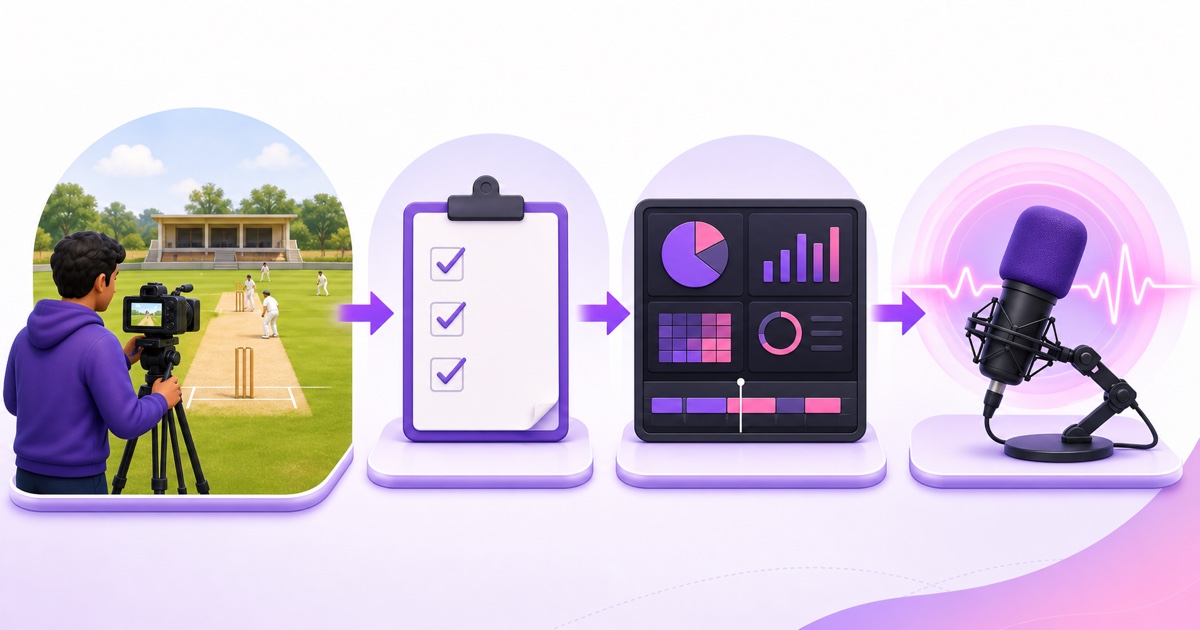
Start with one competition and a modest package: a full authorised replay, a five-minute edit made from your recording, two player interviews, and an audio recap. The footage can then support a consented local-match archive, while the interviews and analysis expand the always-on talk loop. There is no guaranteed audience, but there is a clear reason for that community to share the coverage.
If you have already uploaded broadcast match footage
Do not wait for enforcement to decide your strategy. End any active stream carrying unlicensed match footage, then audit the channel in YouTube Studio → Content. Open the Restrictions details for each affected video and distinguish a Content ID claim from a copyright strike before acting.
- Stop adding exposure. Remove unlicensed clips from future playlists and take questionable public videos out of circulation while you establish their status.
- Do not dispute by reflex. Dispute only when you own the material, hold a suitable licence, or have carefully assessed a real copyright exception. A disclaimer is not evidence.
- If you are licensed, contact the licensor. YouTube advises licensed live-streamers to ask the owner to add their channel to the relevant Content ID allowlist; otherwise even an authorised stream can be interrupted.
- If you have a strike, preserve the notice. Deleting the video after a strike does not clear it. Review the options—expiry after Copyright School, retraction, or a legally significant counter-notification—in the claim-versus-strike guide.
- Pivot the library. Replace copied highlights with three assets you can prove you own: an audio history segment, an original statistical story, and an interview or authorised local-match recording.
The same core rule applies to cricket, films, and television: popularity or age never substitutes for permission. Read the broader guide to streaming movies or TV if your planned channel mixes sports with other broadcast programmes.
Build the cricket channel you can keep
A rights-clean channel is slower to assemble than a folder of downloaded highlights, but every new recording strengthens an asset you control. Price the streaming layer separately from production and permissions: review StreamNeo pricing, then Start free — 24-hour trial, no card when your owned cricket-talk playlist is ready.
More from the journal: 24/7 YouTube Streaming: The Complete 2026 Guide · Cricket Season Loops: Highlights, Replays and What You May Not Touch · Super Chat and Super Thanks on 24/7 Channels: What Actually Converts · Vertical 24/7 Channels: Who They Are For and What Breaks
FAQ
Can I stream 10-year-old match highlights?
No, not merely because they are ten years old. Broadcast and programme rights can persist for decades, and platforms can detect or remove old footage just as they do current clips. Stream it only if you have a licence covering that exact use or qualified legal advice confirming another valid basis.
Is commentary over footage fair use?
It may be relevant to a fair-use or fair-dealing analysis, but it is not automatic protection. The amount used, purpose, transformation, market effect, and applicable country's law all matter. Continuous highlights under a voice-over are especially risky. This is not legal advice.
What cricket content is safe?
The clearest options are your own talk and analysis, graphics you design from properly sourced facts, interviews recorded with consent, licensed material used within its contract, and local matches you film with organiser, venue, and participant permissions.