
A Facebook Page can have viewers, run a stable loop, and still earn nothing from Meta. The reason is simple: monetization has two gates. Your Page or professional profile must get access to the relevant programme, and every piece of content must remain eligible after that access is granted.
This guide reflects Meta's public documentation as of 26 July 2026. That date matters because Facebook has consolidated programmes, changed access paths, and tightened its treatment of unoriginal content. Treat any old checklist of follower and watch-minute thresholds as historical unless the same numbers appear in your own Professional Dashboard today.
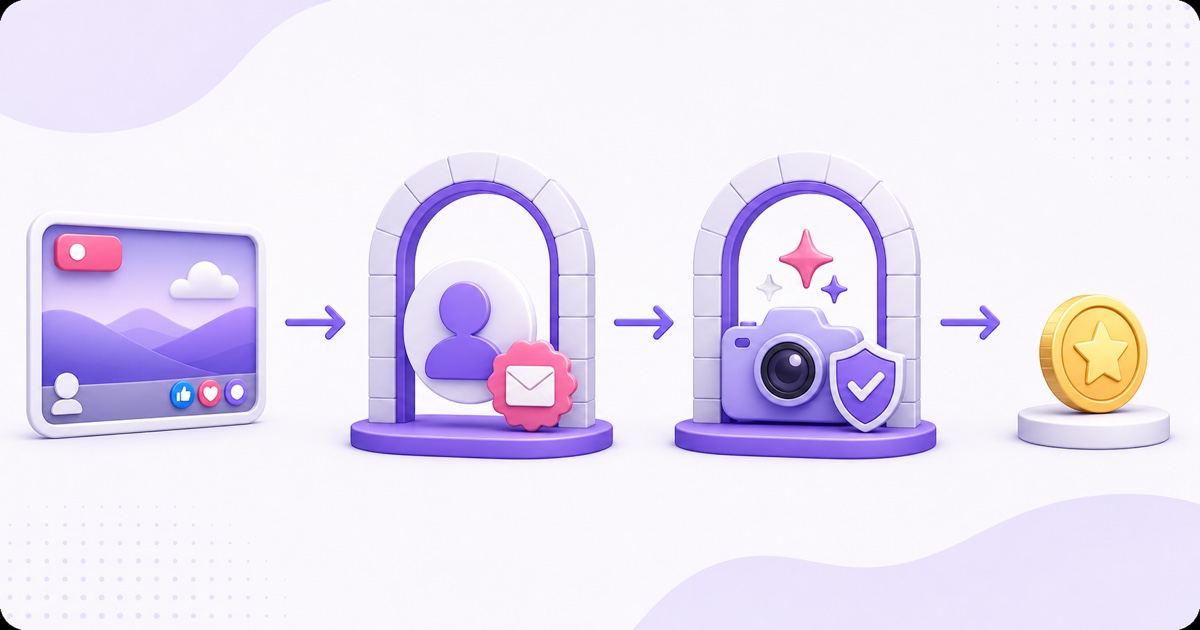
Two gates decide whether a Facebook loop earns
The first gate is account access. Meta considers the creator, country, policy history, payout readiness, and whether the monetization product has been made available to that Page or professional profile. Passing this gate gives you tools; it does not promise that every view will produce revenue.
The second gate is content eligibility. Meta checks originality, rights, advertiser suitability, authentic engagement, and compliance with its monetization policies. A large Page can fail here just as easily as a small one.
- Gate one asks: Has Meta invited or approved this account for Content Monetization or Stars?
- Gate two asks: Is this exact live broadcast original, properly licensed, policy-compliant, and eligible to earn?
Most creators research the first gate because its numbers feel measurable. For a 24/7 re-broadcast, the second gate is usually the harder one.
Eligibility as it stands in July 2026
Facebook now uses Facebook Content Monetization as its main performance-based programme. Meta announced the programme in October 2024 as a merger of In-stream Ads, Ads on Reels, and the Performance Bonus. Its current scope includes eligible short- and long-form video, Stories, photos, and text posts. The old product names still appear in help pages and payout menus, but they are not a safe basis for a new application checklist.
The most current official update is unusually clear: Meta said in March 2026 that Facebook Content Monetization remained invite-only. Creators can express interest in the Facebook mobile app through Professional Dashboard → Monetization → Content Monetization. Meta does not publish a universal follower or watch-time threshold on that current page.
That means articles still presenting 10,000 followers, 60,000 live minutes, or 600,000 total minutes as guaranteed current admission rules are recycling requirements from earlier In-stream Ads programmes. Those figures may explain an old screenshot, but they do not override your live dashboard in 2026.
| Product | Current access signal | What to verify |
|---|---|---|
| Facebook Content Monetization | Invite-only; interest form may be available | Professional Dashboard invitation, policy status, eligible formats, and account country |
| Facebook Stars | Separate review and approval | Stars tile in Monetization, original-content status, policy compliance, and country availability |
| Brand partnerships | Commercial arrangement plus platform disclosure rules | Rights, paid-partnership labelling, and the sponsor's contract |
For a Page, check on desktop in Meta Business Suite → Monetization and on mobile in Professional Dashboard → Monetization. If the two views disagree, use the product-specific status and any appeal option shown on the affected account. A third-party eligibility checker cannot grant access.
How ads actually enter a live broadcast
“In-stream ads” is still useful language for ads delivered in video, even though creator access is now consolidated. Meta's current Content Monetization Terms allow pre-roll, mid-roll, post-roll, overlay, and other placements. They also say Meta may choose an insertion point unless an opt-out control is available.
There is no current public Meta page confirming one universal minimum live duration before every Page can receive its first break. Do not turn an older “ad after 30 seconds” rule for one-minute uploaded videos into a rule for a continuous Live. In July 2026, the honest answer is that the available controls and qualified delivery shown in your dashboard govern the broadcast.
Access also does not guarantee an ad impression. Meta's terms say it is not obligated to insert an ad, and advertisers can block placements. Your revenue therefore depends on qualified content performance and actual ad delivery, not merely on keeping an RTMPS connection open.
For a loop, build natural break space into the programme anyway:
- Put a short visual and audio buffer between segments.
- Avoid a sentence, prayer, recipe step, or sponsor message that crosses the loop boundary.
- Review one complete cycle with every monetization control your account exposes.
- Expect different viewers to receive different ad experiences.
If you are still building the broadcast itself, use the Facebook 24/7 Live setup guide first. Also account for Facebook's current session constraints with the Facebook Live time-limits guide; monetization cannot rescue a stream that has already ended.
The originality rule decides most loop cases
Meta's March 2026 originality update gives the cleanest current standard:
“Content filmed or produced directly by a creator or owner of a Profile or Page is considered original content on Facebook.”
The same official originality guidance says duplicative posts and minor edits to somebody else's work are unoriginal. Adding a border, captions, a speed change, or light narration does not magically create meaningful value. Accounts that keep posting mostly unoriginal material can be deprioritized, made non-recommendable, or demonetized.
For a loop channel, the practical distinction is blunt:
- Your own footage and audio: You have a plausible originality case, provided the broadcast also follows the remaining policies.
- Licensed third-party footage: A copyright licence may let you publish, but permission alone does not make the work original for monetization.
- Downloaded clips, compilations, television, films, or other Pages' videos: A repeated broadcast is generally a poor candidate for monetization and may create separate copyright risk.
- Your own heavily repeated segment: Ownership helps, but it is not an automatic approval. Meta can still judge duplicative or low-value behaviour at content or account level.
Honest “pre-recorded” or “replay” labelling is good practice, but it does not convert reused material into original work. If you need the broader platform comparison, read the rules for monetizing a 24/7 loop.
Stars are fan support, not passive ad revenue
Stars let viewers send a paid virtual item with a comment on eligible Live videos and other supported content. Meta's current Stars eligibility help says each creator is reviewed and approved; content must meet Community Standards, follow Content Monetization Policies, create real engagement, and satisfy its originality requirement. Availability also varies by country and account.
Look for the Stars product in Professional Dashboard → Monetization. If it appears, finish onboarding and enable it on the eligible content types offered to you. Do not rely on a follower threshold copied from an old tutorial; Meta's current public help page does not give one universal creator number.
Stars fit an interactive live show because a host can thank supporters, answer questions, and give viewers a reason to participate. An unattended overnight loop removes that feedback. The button may technically exist, but a silent stream at 3 a.m. is the weakest possible context for real-time fan support.
If Stars matter to your plan, schedule hosted windows inside the wider channel: a daily live introduction, a moderated request hour, or a weekly Q&A. Keep a human moderator present and never offer prohibited incentives for Stars or synthetic engagement.
Getting paid is a separate setup job
Approval is not a payout account. Meta asks for the payee's legal or business details, tax information, and a linked payment method. Complete those fields as soon as the Monetization area opens them; a mismatch between the payee name, tax record, and bank details can delay payment.
Meta's current payout help says payments are monthly after the product's minimum balance is reached. In the United States it lists a USD 5 minimum. Outside the United States, it lists USD 25 for PayPal or a local bank account and USD 100 for wire transfer. Product terms or the payout screen may apply a different threshold, so record the amount shown for your own account rather than planning around a blog post.
Balances below the applicable threshold roll forward; they are not paid immediately after each Live. Meta's ad terms also describe payment approximately 30 days after the end of the relevant calendar month, subject to compliance, valid onboarding, deductions, and actual collected revenue.
For an Indian creator, Meta receipts are foreign income. Ask your accountant how to handle invoices, GST, withholding documents, and income-tax reporting for your exact entity; this article is not tax advice.
What usually earns before platform ads do
A small Page should not treat ad eligibility as the only respectable business model. A focused audience can have commercial value before Meta invites the account or serves a single ad.
| Revenue path | How a 24/7 loop supports it | What makes it credible |
|---|---|---|
| Website traffic | A pinned comment and clear on-screen destination move interested viewers to a useful page | The landing page matches the stream's topic and solves the next problem |
| WhatsApp enquiries | Local services, classes, and devotional organisers can convert questions into conversations | Business hours, consent, and response expectations are stated clearly |
| Products or services | Demonstrations, lessons, catalogues, and event replays show practical value continuously | The offer is yours, accurately described, and relevant to the programme |
| Sponsorships | A niche programme gives a suitable brand a predictable placement | Written rights, honest disclosure, and no promise of invented audience numbers |
These routes often suit a smaller Page better because they depend on audience intent, not a platform invitation. A yoga teacher may value one class enquiry; a local temple channel may value an event booking; a retailer may value a WhatsApp catalogue conversation. None requires an earnings estimate to explain the mechanism.
Facebook Premiere can also be a better fit when the content depends on a concentrated audience and live replies rather than an endless unattended feed. Compare the formats in Facebook Premiere vs Facebook Live.
Run this audit before you apply
Do not wait for an invitation to discover that half the library cannot qualify. Audit the exact files and Page history you plan to monetize.
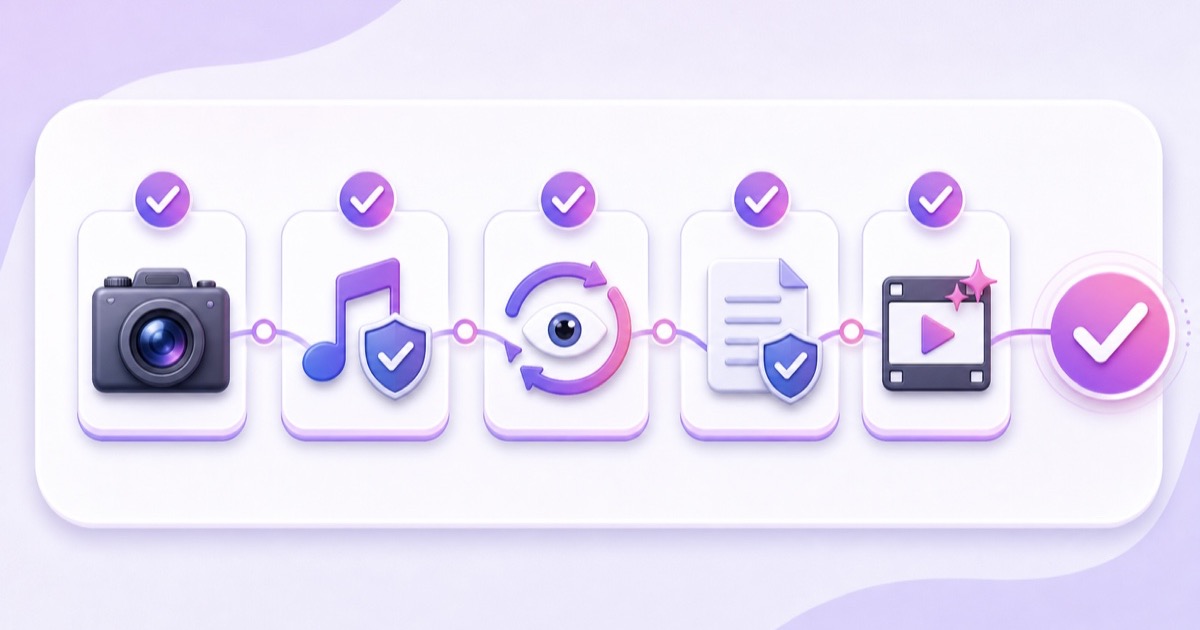
- Prove the originality of every minute. Keep project files, recording dates, raw footage, contracts, and contributor releases. Mark third-party segments separately.
- Clear music rights. A video licence does not necessarily cover the recording and composition in its soundtrack. Confirm live, commercial, and platform use.
- Label the re-broadcast honestly. Tell viewers when footage is pre-recorded or looping. Avoid “happening now” claims for an old event.
- Review Page policy history. Open the Monetization and Page status areas, resolve actionable violations, and document any appeal result.
- Re-check Meta's current rules. Confirm that the format, country, Page, and exact content remain covered on the day you apply. Policies and programme access can change.
A streaming tool can keep an authorised video feed running, but it cannot change either monetization gate: Meta decides account access and content eligibility. If your rights and programme status are clean, Start free — 24-hour trial, no card.
FAQ
What are Facebook's requirements to monetise live video?
As of 26 July 2026, Facebook Content Monetization is invite-only, and Meta does not publish one universal numeric threshold that guarantees entry. Check Professional Dashboard → Monetization → Content Monetization for your invitation, interest form, country availability, policy status, and product-specific requirements. Content must also pass originality, rights, engagement, and monetization-policy checks.
Can I monetise a looped re-broadcast on Facebook?
A loop of footage you filmed or produced has a better case, but ownership does not guarantee approval. Meta deprioritizes and may demonetize duplicative or unoriginal content. A recycled, downloaded, or lightly edited loop from another source generally does not qualify, even when you label it as a replay.
Do Stars work on a 24/7 stream?
Technically yes where the creator, country, and content are approved for Stars. Practically, Stars depend on live fan interaction, so an unattended loop is a poor setting. Hosted segments, moderation, and genuine replies give supporters a reason to participate.