A motivational speech live stream can be a useful companion for someone revising at 2 a.m., returning to work after a setback, or trying to rebuild a daily routine. But the easiest-looking version—download famous speeches, add dramatic music, and loop them—is also the version most likely to create copyright and monetization trouble.
The durable channel is built from assets you can prove you have the right to use: your scripts, your recordings, commissioned voices, cleared music, and licensed visuals. This playbook starts with that rights foundation, then turns it into an India-focused 24/7 motivation channel that can grow without promising anyone a guaranteed result.
Motivational does not mean free to use
A speech being educational, uplifting, old, or widely reposted does not make its recording free. Famous keynote audio, podcast clips, creator videos, movie monologues, interview extracts, and audiobook passages are normally protected works unless you have a valid license, permission, or a relevant copyright exception. Crediting the speaker or writing “no infringement intended” does not create those rights.
The label “no copyright motivation” is not a license. Compilations are frequently re-uploaded by people who do not own the underlying speech, soundtrack, or b-roll. Before using any third-party asset, trace it to the actual rights holder and read the original license. A description copied across several channels is not evidence.
YouTube explains that uploaded videos are checked against material supplied by rights holders, and third-party work can lead to a Content ID claim or a copyright removal request. Its official copyright tips recommend owning the rights, getting permission, or confirming a valid exception before upload. For a deeper distinction between claims and strikes, read the guide to copyright strikes on a 24/7 loop.
If your plan depends on the rights holder never noticing, it is not a rights-cleared plan.
Do not treat fair use or fair dealing as a shortcut for replaying an entire speech for the same motivational purpose as the original. Exceptions vary by country and are assessed case by case. YouTube notes in its fair-use guidance that only courts can decide fair use and even short uses may receive a Content ID claim. Commentary or criticism can be a different format, but a continuous speech rebroadcast is a weak place to build a channel.
What you can stream safely
The cleanest source is your own work: write the script, record the voice, create or license the music, and keep the project files. That gives you a clear production trail and makes it easier to show YouTube what you contributed. Originality also lets the channel sound specific rather than like another generic compilation.
Commissioned voiceover is the next practical path. You supply the script, a voice artist records it, and both sides sign a written agreement. The agreement should identify the recordings, grant the uses you actually need, state whether commercial YouTube live streaming and looping are allowed, clarify the term and territories, cover editing into clips, and record the payment. Do not assume that paying an invoice automatically transfers every right.
| Source | Use only when | Evidence to keep |
|---|---|---|
| Your own speech and recording | You created every included element or separately cleared it | Scripts, raw audio, project files, music and visual licenses |
| Commissioned voiceover | The written agreement covers commercial live loops and edits | Signed agreement, brief, invoice, delivery files |
| Third-party recording | The actual rights holder gives explicit written permission for the intended use | Permission email or contract plus the sender's authority |
| Public-domain text | You verified the text's status in the relevant jurisdiction and made your own recording | Source edition, status research, your raw narration |
| Licensed music or b-roll | The source terms allow commercial YouTube live use, repeated playback, and your channel type | License text, receipt, asset URL, download date |
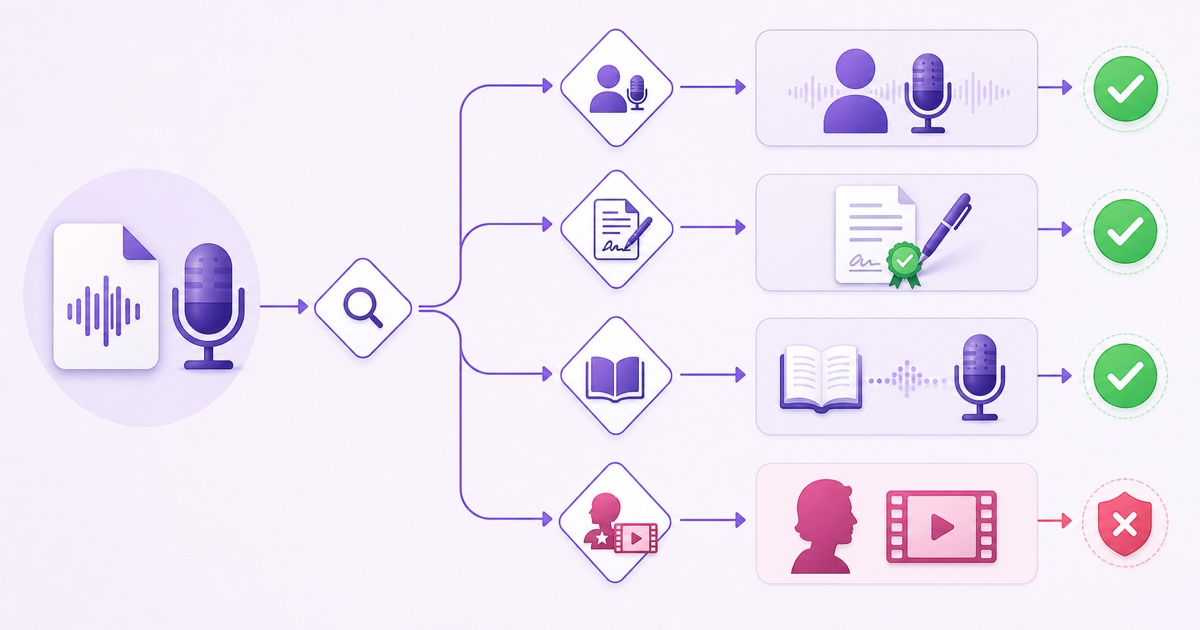
Public-domain text and a public-domain recording are not the same thing. An old philosophical passage may be free of copyright where you operate, while a modern narrator's performance and sound recording remain protected. Verify the text, use a reliable edition, and record it yourself. YouTube also warns that public-domain status can be complicated and is the uploader's responsibility in its copyright overview.
Apply the same discipline to music. “Royalty-free” usually describes a licensing model; it does not mean nobody owns the track. Check whether the plan covers monetized video, live broadcasting, continuous loops, multiple channels, and clipped Shorts. Save a copy of the terms that applied when you downloaded the asset.
Produce a loop people can actually use
Start with one audience moment, not a broad promise to change lives. For an India-focused channel, useful lanes include daily discipline, board-exam preparation, JEE or NEET revision routines, dealing with a poor mock-test result, returning after failure, interview nerves, and consistency for first-job professionals. Speak to the situation without pretending that listening guarantees a rank, job, income, or cure.
Write 10–15 segments of 3–5 minutes each. That creates 30–75 minutes of original material before repeats. Give every segment one job: name the problem, reframe it honestly, offer one concrete action, and close with a line that still makes sense when the next segment begins. Avoid fabricated biographies and quotes you cannot source.
- Script in batches: outline all themes, then write each segment in the same voice. Read it aloud and remove inflated claims.
- Record cleanly: use the same microphone position, room, input level, and delivery distance for the batch. Record a few seconds of room tone for repairs.
- Edit for speech first: remove harsh breaths and long mistakes without making the voice robotic. Keep the background bed comfortably below the narration.
- Pace the rotation: open with medium energy, alternate focused and reflective pieces, place the calmest segment after an intense one, and end on a natural reset.
- Test the seam: join the last file to the first and listen on phone speakers, headphones, and a television before publishing.
Use Hindi, English, or Hinglish according to the audience you can serve naturally. A Hinglish segment should sound spoken, not like every second word was translated mechanically. If you commission more than one artist, give them a pronunciation guide for names, acronyms, and regional phrases.
Keep a simple rights sheet beside the production plan: filename, script owner, voice artist, agreement link, music asset, license URL, visual source, export date, and approval status. When you refresh the channel, this sheet stops an uncleared file from slipping into the playlist.
Build a visual layer that survives repetition
The visual layer should support attention without competing with the voice. Use one type system, a small palette, consistent transitions, and a restrained motion language. Kinetic text can surface your own key lines, but keep each card short enough to read on a phone. Do not put a quote beside a famous person's image unless the wording is verified and the presentation does not imply that person endorses your channel.
Licensed b-roll can add movement: early-morning streets, a study desk, rain on a bus window, a runner tying shoes, or hands preparing notes. Read the provider's terms for commercial video and live-loop use rather than relying on a generic download badge. If a provider limits repeated broadcasts, standalone use, or redistribution, choose another asset.
Export every segment to one house specification. A practical default is MP4, H.264 video, AAC audio, 1920×1080, 30 fps, and constant frame rate. Keep resolution, frame rate, audio sample rate, and channel layout consistent across files so transitions do not produce black frames, volume jumps, or decoder delays. The looping playlist guide covers ordering and uniformity in more detail.
A reliable first-pass workflow is: export three segments, place them in sequence, inspect every boundary, then process the full batch. Build a visible transition card that lasts long enough to breathe but does not announce a false new beginning. Because viewers can join at any point, each segment should orient them within its opening seconds.
Once the complete rights-cleared playlist is ready, the delivery setup is short. In YouTube, use YouTube Studio → Create → Go live → Stream, prepare the broadcast, and copy its stream key without sharing it publicly. In StreamNeo, use Videos → Upload Video, then Streams → select a slot → choose YouTube → paste the stream key → select the uploaded videos → Go Live Now. Confirm the preview and audio in YouTube Studio before treating the stream as launched.
Grow around real audience moments
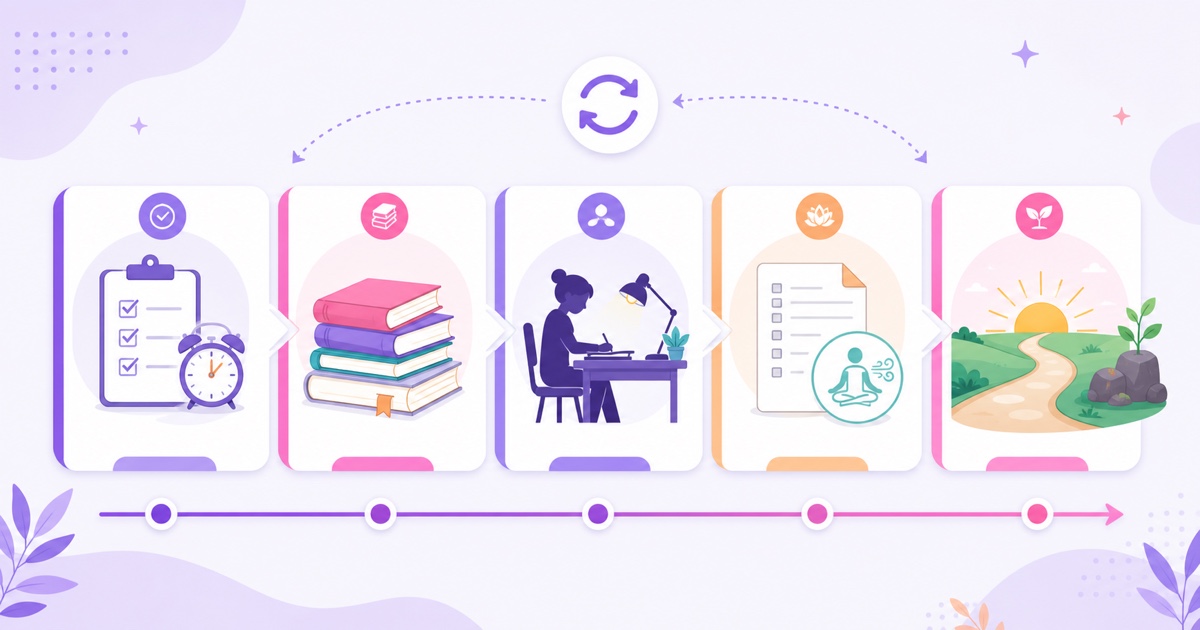
Motivation demand in India changes around board, entrance-exam, result, and admission cycles. Build your calendar from official exam schedules and the audience's emotional sequence rather than chasing vague “study motivation” all year. Before preparation intensifies, publish discipline and planning segments. Near exams, shift toward revision, sleep, and calm. After results, lead with perspective, recovery, and next actions.
Hindi and Hinglish give the channel a sharper identity than another generic English compilation. Research the phrases your audience actually uses, such as “padhai motivation” or “exam stress motivation,” but keep the title accurate. Name the language, situation, and format; do not claim “guaranteed success,” “top rank,” or a life-changing outcome you cannot deliver.
Cut Shorts from your own strongest segments. Each Short should stand alone: one useful thought, captions, and a description or pinned comment pointing to the live stream. Rotate openings and contexts instead of posting the same excerpt repeatedly. The live channel provides depth; Shorts provide entry points.
Review the content monthly. Replace stale seasonal segments, add new original recordings, fix weak transitions, and compare which themes hold attention. A set-and-forget delivery system does not mean set-and-forget editorial work. The reason to refresh is viewer value, not an invented promise that a monthly change will trigger growth.
If you also teach language through repeated listening, the structure in the language-learning loop playbook can help you design call-and-response or vocabulary-led motivational segments without turning the stream into empty repetition.
Monetize without weakening trust
Copyright clearance and YouTube Partner Program eligibility are separate tests. Permission may prevent one rights problem, yet a channel built mainly from lightly edited third-party clips can still fail YouTube's reused-content review. YouTube's current channel monetization policy says monetized content should be original and authentic, not mass-produced or repetitive. Review the full explanation of whether you can monetize a 24/7 looped stream before planning revenue.
Make your contribution easy to recognize: original scripts, identifiable narration, coherent visual direction, purposeful segment variety, and regular editorial updates. Keep your creation records. None of this guarantees YPP approval or earnings; it simply gives reviewers and viewers a clearer picture of what you made.
Disclose sponsorships and paid segments clearly. If a coaching service sponsors a segment, say so in the stream and use the platform's paid-promotion tools where required. Keep the advice independent, avoid unverifiable rank or placement claims, and never imply that an author, public speaker, exam board, or quoted person endorses the channel.
StreamNeo's useful role is operational: upload the commissioned or self-recorded segments once, run the playlist from the cloud, and refresh selected files monthly without keeping a PC awake. You still own the creative judgment, rights checks, metadata, moderation, and policy compliance. See the current StreamNeo plans, then start free—24-hour trial, no card when the cleared loop is ready for a private test.
More from the journal: 24/7 YouTube Streaming: The Complete 2026 Guide · Cricket Season Loops: Highlights, Replays and What You May Not Touch · Navratri, Diwali and Ganesh Chaturthi: A Practical 24/7 Channel Playbook · Regional Language News Loops: Building for Bharat, Not Metro English
FAQ
Can I loop famous motivational speeches?
Not safely without the required rights. The words, performance, sound recording, music, and visuals may each have separate owners. Recording or commissioning original speeches is the cleanest path. If you believe an exception applies, get advice for your jurisdiction rather than assuming a credit line is enough.
Is “no copyright motivation” audio safe?
Not by label alone. Find the original source, identify the actual rights holder, and confirm that the license covers commercial YouTube live streaming, repeated playback, and your intended edits. If you cannot verify that chain, leave the audio out.
When does motivation content peak in India?
Interest often becomes more relevant around board exams, JEE and NEET preparation, results, and admission periods, but dates vary by year and region. Use official schedules to plan discipline, revision, exam-calm, and recovery themes without promising ranks or outcomes.