
Starting an ambience channel is simple.Building one that strangers choose over thousands of rain, fireplace, forest and sleep videos is not.
This 0 to 1000 subscribers plan gives you 90 days of focused work, but it does not turn a difficult outcome into a promise.The goal is to build a small, original content library, find evidence of demand and create a repeatable growth routine.If subscriber growth takes longer, the useful work still remains.
The honesty contract, up front
Most new ambience channels do not reach 1,000 subscribers in 90 days.A channel can execute carefully and still grow slowly because the niche is crowded, audience response is unpredictable and discovery often arrives in bursts.Anyone guaranteeing a deadline is selling certainty that YouTube does not provide.
Treat 1,000 as a direction, not a day-90 entitlement.Your controllable targets are more practical: three strong base scenes, a live stream that stays healthy, two useful clips each week, one measured packaging test every fortnight and one analytics review every week.
The contract: no bought views, no sub4sub, no rushed copies and no changing the plan after every quiet day.Ninety days buys you evidence, skills and a library—not a guaranteed result.
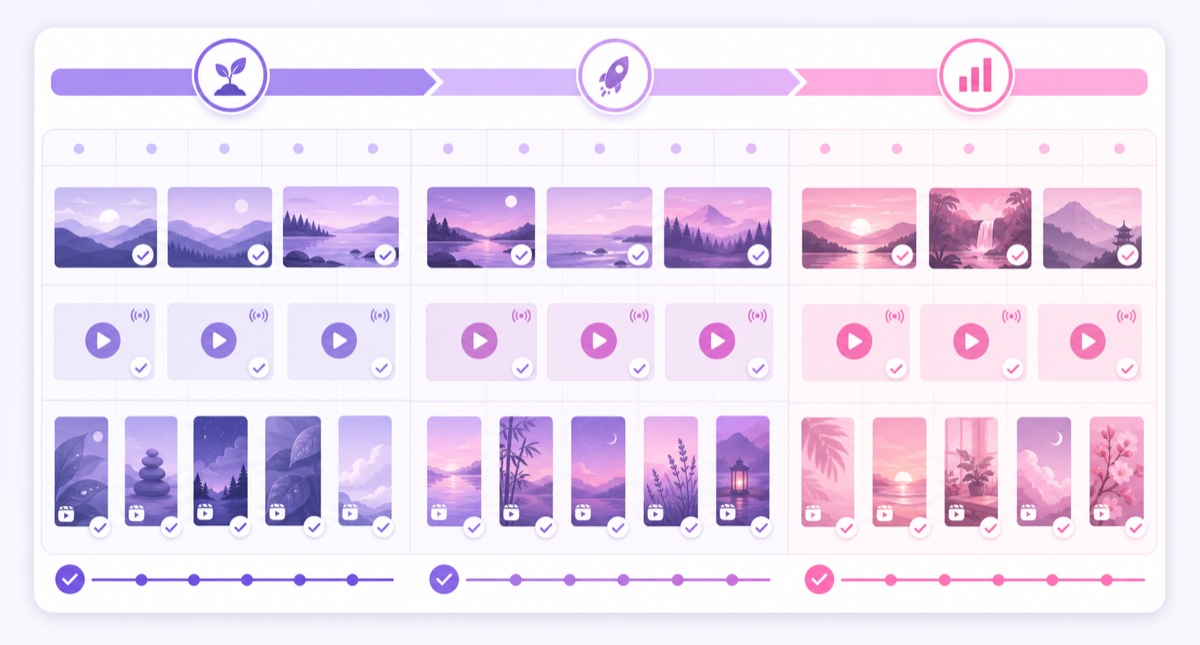
Days 1–14: build the foundation
Begin with a search-gap check.Open YouTube in a signed-out or private window and search the broad idea you have in mind.If the first page for “rain sounds” is dominated by established channels offering polished, nearly identical videos, narrow the promise.Try “rain on a tin roof,” “monsoon rain on a Mumbai balcony” or “quiet Himalayan cabin at dawn.”
You are not looking for a query with zero results; that can mean zero demand.Look for a useful theme where results exist but the top options feel generic, old, visually weak or mismatched to the exact scene a viewer wants.Record ten candidate queries, note recurring title language and choose one scene family you can produce repeatedly without copying anyone.
Produce three base scenes properly
Create three videos in the same family but give each one a distinct reason to exist.A tin-roof series might include heavy monsoon rain, gentle night rain and rain with distant thunder.Three coherent scenes make a channel feel intentional and give you something meaningful to compare later.
Use footage and audio you recorded yourself, commissioned or licensed for this use.Keep receipts and licence terms.Free stock does not automatically permit a file to become the main value of a continuous broadcast.The ambience-loop production guide explains sourcing, matching motion at the seam and crossfading audio.
Export a clean master for each scene.Use MP4 with H.264 video and AAC audio unless your workflow requires another supported format, and test the loop repeatedly with headphones.Follow the 24/7 streaming format guide rather than guessing at codec settings after launch.
Give the channel one clear promise
Choose a memorable name, readable channel art and a one-line promise such as “Indian monsoon rooms for sleep and focus.” A new visitor should understand the scene family in five seconds.Prepare a consistent thumbnail system, but vary the focal image enough that viewers can distinguish one stream from another.
- By day 4: niche and one-line promise chosen.
- By day 10: three original base scenes exported and seam-tested.
- By day 14: channel art, descriptions, thumbnail system and upload checklist ready.
Days 15–45: launch and learn
On day 15, make the best scene your continuous live stream.In YouTube, the path is YouTube Studio → Create → Go live → Stream.Write an honest title that says what the viewer will hear or see, and keep the visibility public if you want eligible watch time to count.
StreamNeo can run the pre-recorded loop without leaving your computer on; the ₹49/day option suits a short experiment before a monthly commitment.Do not start three simultaneous streams just because you produced three scenes.One focused stream produces cleaner evidence.
Public live viewing can contribute valid public watch hours, but YouTube excludes livestreams that are unlisted, deleted or not converted to video on demand from YPP thresholds.Read the official YPP eligibility guidance and the practical watch-hours explainer before treating every dashboard hour as qualification progress.
Build a discovery flywheel around the loop
Publish two Shorts or vertical clips per week from your own scenes.Each clip needs a satisfying moment—a thunder roll, a chai-by-the-window detail or a before-and-after sound mix—not a random crop.Use the description or pinned comment to point interested viewers toward the full live experience.Shorts do the recruiting; the long stream does the deeper viewing.
Post a simple community prompt once a week if the Posts feature is available: ask viewers which rain intensity helps them focus, or let them choose next week’s scene.Use replies as research, not as a reason to change direction after one comment.
Every fortnight, test either the title or the thumbnail, never both together.Log the date, old version, new version and the reason for the change.The live-stream SEO method gives you a disciplined way to package the stream without turning each quiet afternoon into a rebrand.
Days 46–90: follow the data
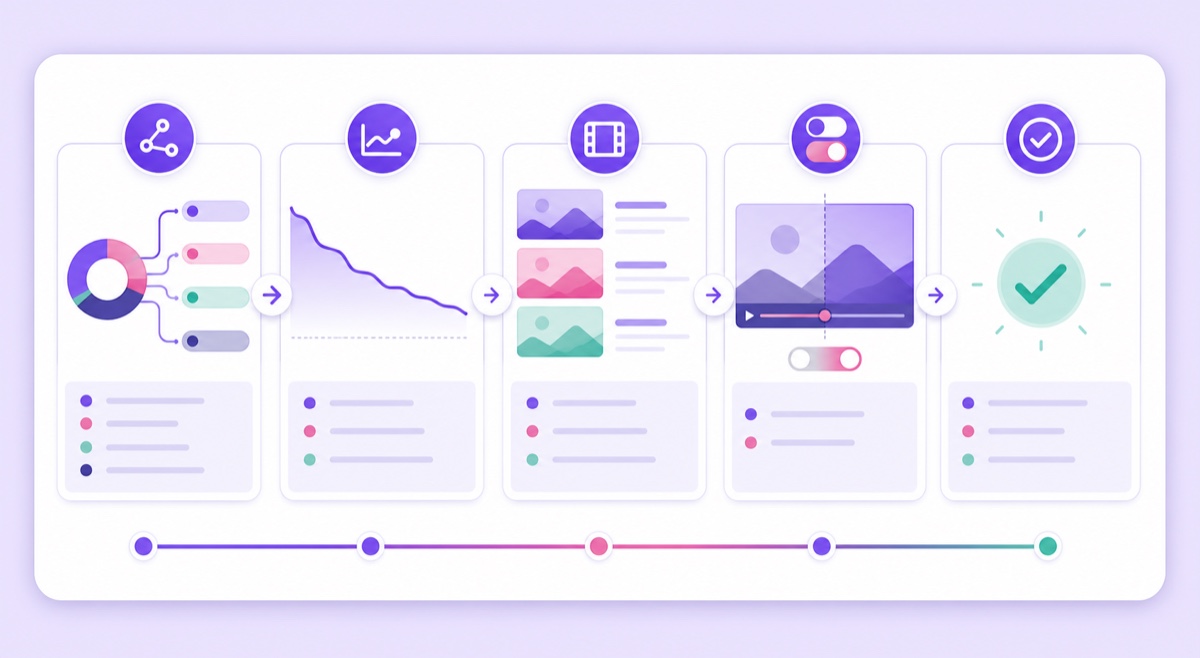
By day 46, you have enough activity to stop debating preferences and start reading patterns.Set a fixed 30-minute review each week.For channel-level live performance, open YouTube Studio → Analytics → Content → Live.For one stream’s retention, use YouTube Studio → Content → Live → select the stream → Analytics → Engagement.
Review traffic sources first.YouTube Search suggests a query is matching real intent; Suggested and Browse indicate the packaging and viewing behaviour are earning wider tests; External traffic shows whether embeds or shares are doing work.Then inspect average view duration and key retention moments.YouTube’s official live-metrics guide confirms that traffic sources, audience retention and watch-time reports are available for live content.
Double down without becoming repetitive
Compare scene families, not isolated spikes.If gentle tin-roof rain holds viewers longer across several weeks, make the next scene a meaningfully different member of that family: a dawn version, a darker sleep version or one with a softer mix.Do not upload the identical render with a new thumbnail.
If a scene receives little discovery and weak viewing after fair packaging tests, park it.That is not an admission that the production hours were wasted.It taught you what this audience does not choose, and parts of the footage or sound may still support an original Short or a re-edited scene.Protect the lesson; release the attachment.
The boring truths that protect growth
Consistency beats hacks because it gives both viewers and you a stable product to evaluate.It does not mean posting weak material on schedule.A missed clip is cheaper than teaching the audience to expect filler.
Sub4sub, bought views and engagement pods are not harmless shortcuts.YouTube’s fake engagement policy explicitly prohibits artificial metric inflation and subscription exchanges.Even before enforcement, manufactured subscribers damage your analytics: people who never wanted rain ambience do not give useful feedback about titles, scenes or retention.
Real growth is lumpy.A Short may bring a sudden wave of viewers, followed by a week that looks silent.Judge the system in weekly and monthly windows.During valley weeks, complete the scheduled review, make only the planned test and return to production.Your mood is data about being a creator; it is not data about the channel.
What day 90 actually looks like
| Scenario | What the evidence says | Next move |
|---|---|---|
| Ahead | Subscribers, returning viewers and watch time are rising across several weeks; one scene family has clear pull. | Keep the winning promise, deepen that family and resist launching an unrelated niche. |
| On pace | Growth is steady but the 1,000-subscriber line remains uncertain; clips and the stream are both finding some viewers. | Continue for another 30 days, improve the strongest scene and keep one-variable packaging tests. |
| Behind | Discovery and retention remain weak despite consistent output and fair tests. | Narrow or reposition the scene promise, reuse only assets that fit the new direction and run a fresh measured cycle. |
Behind does not automatically mean failed.You now own a production workflow, three or more original scenes, a set of packaging tests and audience evidence.The subscriber threshold is only one part of the journey; valid public watch hours and channel review still matter, as the YPP math guide explains.
The plan on one page
| Week | Main job | Completion check |
|---|---|---|
| 1 | Run the search-gap check and choose one narrow scene family. | Ten queries logged; promise written. |
| 2 | Finish three base scenes, rights records, seamless-loop tests and channel identity. | Three masters and launch assets ready. |
| 3 | Start one public 24/7 stream and publish the first two clips. | Stream healthy; two clips live. |
| 4 | Continue clips, post one audience prompt and check stream health. | Cadence completed without random changes. |
| 5 | Run the first title or thumbnail test. | One variable changed and logged. |
| 6 | Cut two more clips and review early discovery patterns. | Notes saved; no premature verdict. |
| 7 | Begin the fixed weekly analytics ritual. | Traffic, retention and scenes reviewed. |
| 8 | Produce one follow-up in the strongest scene family. | New scene is distinct, not a duplicate. |
| 9 | Run the next single-variable packaging test. | Hypothesis and result logged. |
| 10 | Park a weak idea or deepen a winner. | Decision tied to several weeks of evidence. |
| 11 | Refresh clips from the best original footage. | Two clips serve the live stream’s promise. |
| 12 | Review returning viewers, watch time and source quality. | Day-90 scenario drafted. |
| 13 | Choose ahead, on-pace or behind and write the next 30-day plan. | One direction chosen; no vanity reset. |
Give the experiment a fair runway, preserve what the audience proves useful and let the next month be smarter than the first.Start free — 24-hour trial, no card.
FAQ
Is 1,000 subs in 90 days realistic?
It is possible, but it is not typical or guaranteed.This plan improves your odds by concentrating production, discovery and measurement into one repeatable system.Judge day 90 by both growth and the quality of assets and evidence you built.
How many videos do I need to start?
Start with three strong base scenes.They are enough to establish a coherent channel, launch one continuous stream and compare audience response.Thirty rushed scenes create more work but rarely create clearer learning.
Do loops alone grow subscribers?
Usually slowly.A useful loop can earn deep viewing, but clips and Shorts reach people who were not already searching for a long ambience session.Use those short pieces as invitations into the live stream, while keeping every clip original and satisfying on its own.