A second 24/7 stream can open a new audience, but it can also multiply a half-built operation.The right time to scale is not when stream one finally stays online for a weekend.It is when that stream has become a boring, documented system and you know exactly what job stream two will do.
Think like a small network owner, not a collector of live badges.Your first stream is proof that the format works.Your second should test whether the system works twice—without twice the chaos.
Pass the readiness checklist before you scale
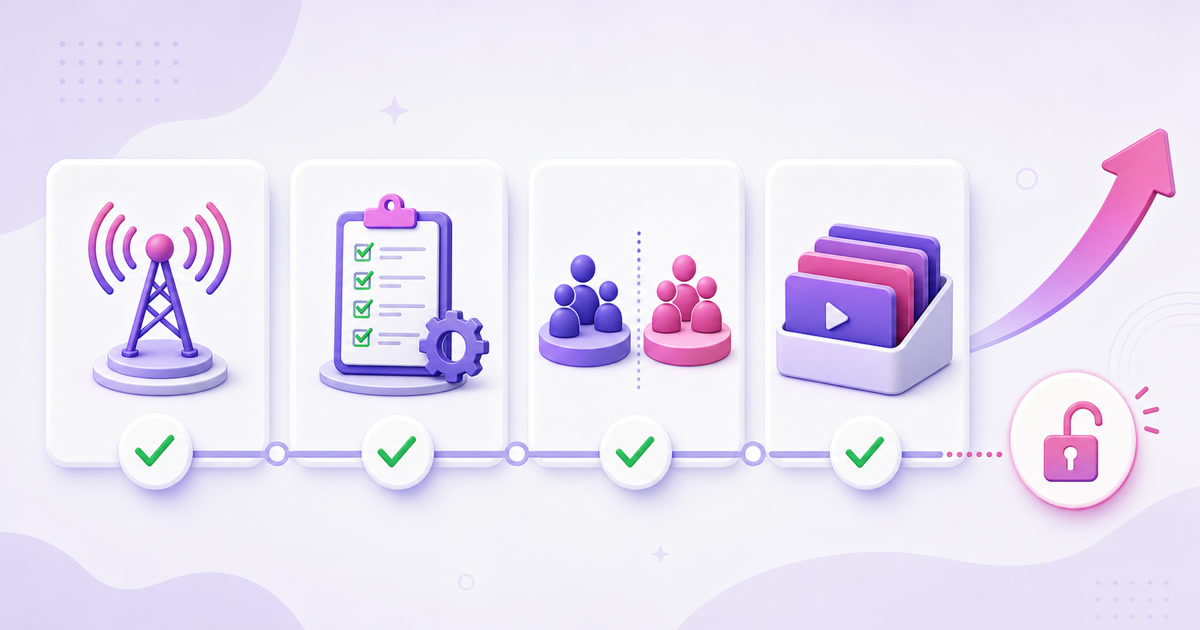
Use these four gates as a hard filter.If one is still open, the highest-return move is usually to strengthen stream one rather than add another bill and another content calendar.
- Stream one has been stable for at least 30 days. It should not need manual restarts, emergency file replacements, or repeated stream-key fixes.A rare platform incident is different from a weekly rescue ritual.
- Your refresh ritual is documented and takes under 30 minutes a week. Write the exact sequence: choose the next file, check rights, normalize the export, upload it, change the video, inspect stream health, and record the change.If the process lives only in your head, it is not ready to clone.
- You can name a distinct second audience. “More viewers” is not an audience.“Tamil devotional listeners who currently leave the Hindi stream” or “night-shift students who want brown noise instead of Pomodoro prompts” is specific enough to build for.
- Your library has depth. A second slot needs enough owned or properly licensed material to avoid becoming a thin copy of stream one.List the first four weeks of programming before spending anything.
The practical test: if you went offline for seven days, could another person keep stream one fresh by following your checklist?If not, systemize first.
Choose one of four shapes for stream two
“Add another stream” hides four different strategies.Pick one shape before you choose content, a channel, or a platform.Mixing two experiments at once makes the result hard to interpret.
Second language
Keep the core concept but rebuild it for another language audience: Hindi and English study streams, or Hindi bhajans and a separate Tamil devotional schedule.This is not a voice-track swap.Titles, thumbnails, on-screen prompts, chat moderation, cultural references, and upload timing should fit the new audience.
This shape works when stream one already attracts comments or search terms from another language group.The content idea is proven, while the packaging and community are new.
Second niche
Serve a different viewing need, such as sleep ambience beside a study channel.The new niche should have its own library, promise, title system, and refresh calendar.It will usually deserve a separate channel because a subscriber who wants eight hours of rain may not want a timed focus session in the same feed.
This is the cleanest diversification play, but it asks the most from production.You are not merely adding an encoder output; you are launching a second content product.
Second platform focus
Build a version around another platform’s audience and operating rules.A dedicated Facebook presence, for example, may need shorter broadcast cycles, Page-specific copy, and a different community cadence.Review the Facebook pre-recorded live workflow before assuming a YouTube setup transfers unchanged.
The advantage is distribution diversification.The trade-off is that platform-side setup, analytics, comments, and creative packaging remain separate work even if the source video is related.
A/B format experiment
Stay in the same niche but test a meaningful format change for 30 days: talking Pomodoro versus silent timer, long rain scenes versus a mixed ambience rotation, or a webinar loop versus topic-specific clips.Give each version a clear hypothesis.
Do not change the thumbnail, format, schedule, and audience together.One major variable produces a result you can act on; four variables produce an interesting story with no diagnosis.
Use a math template, not a revenue promise
The second slot has a visible price and several less-visible costs.In India, StreamNeo’s current slot pricing is ₹49 per day or ₹999 per month; international monthly pricing is $9.99.Check the pricing section for the plan that applies to you.Pricing is the easy part of the decision.
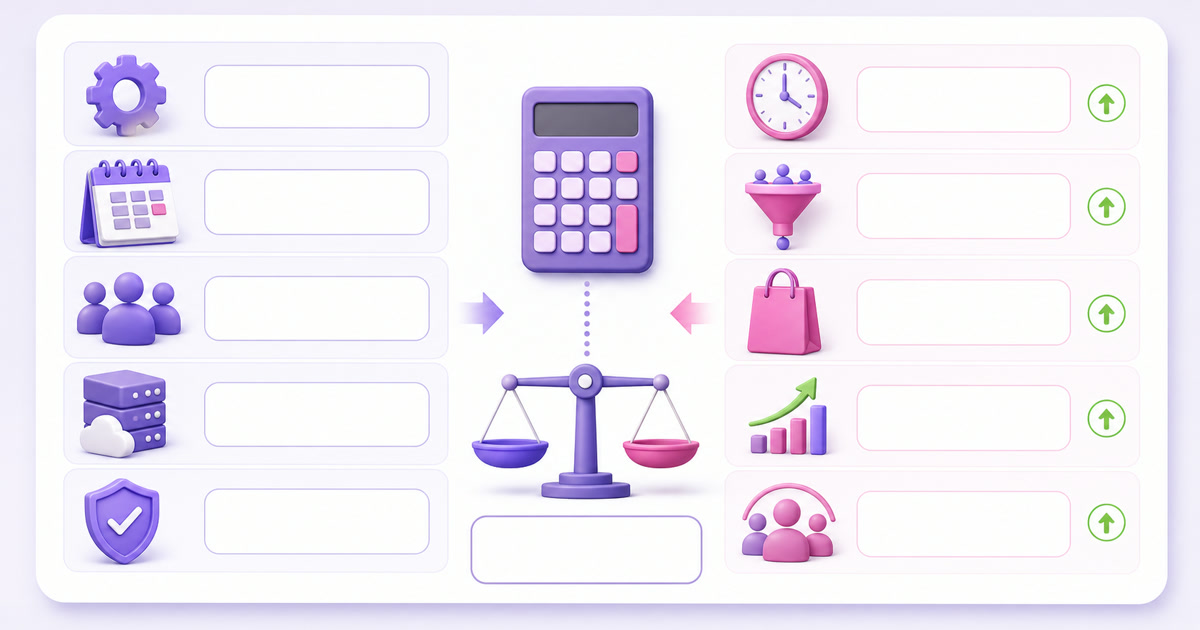
Fill in this worksheet with your own numbers.Do not count “exposure” twice, and do not assign income to watch hours unless your channel has a real monetization path.
| Worksheet line | Your input | How to estimate it |
|---|---|---|
| Slot cost | ₹___ per pilot or ₹___ per month | Use the actual plan and pilot length. |
| Content production | ___ hours × ₹___ | Include editing, licensing checks, exports, and thumbnails. |
| Weekly operations | ___ hours × ₹___ | Include refreshes, comments, community posts, and analytics. |
| Incremental watch-time value | ___ | Useful if public watch hours support your YPP plan; understand the rules in the watch-hours guide. |
| Lead or sales value | ___ qualified actions × ₹___ | Use actual conversion value, not total views.B2B creators can adapt the always-on webinar funnel. |
| Audience-asset value | ___ | Track returning viewers, subscribers, email opt-ins, or another owned metric you can verify. |
Then calculate: expected measurable value minus slot cost, production cost, and operating time.Run a conservative case, a base case, and an optimistic case.If the conservative case would create financial stress, shorten the pilot or wait.If the model only works after assigning a generous rupee value to vague awareness, the evidence is not ready.
Pilot cheap and commit slowly
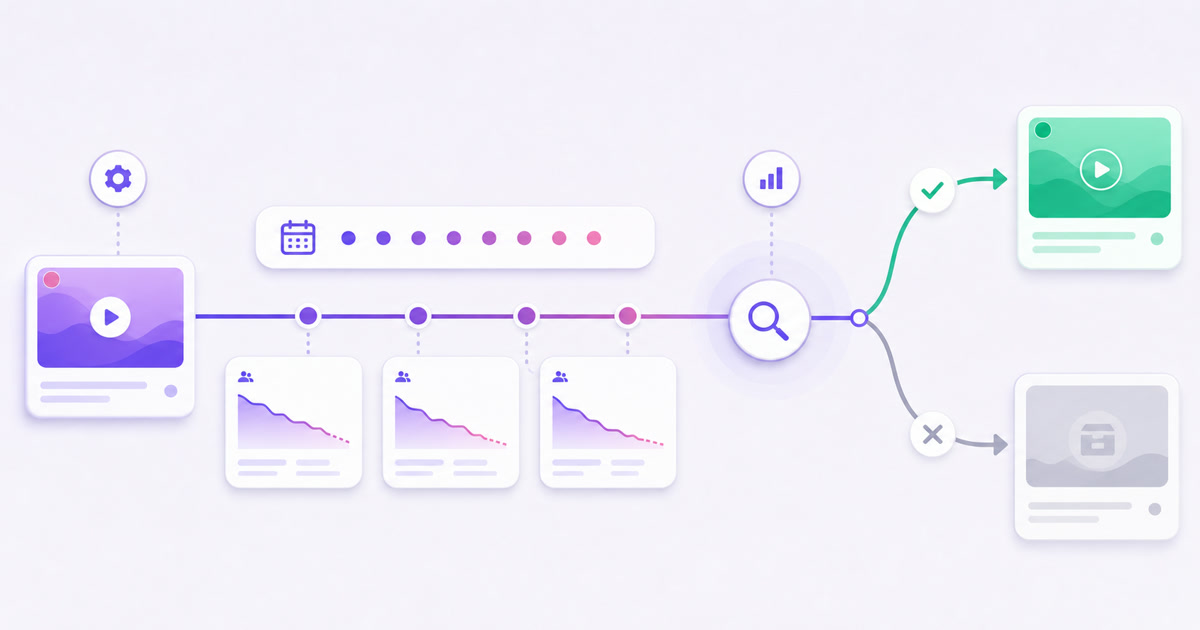
A daily slot lets you test the operating model without turning a hunch into a monthly habit.Run the second concept for 7–14 days.That is long enough to observe more than one weekday pattern, but still short enough to stop without defending a sunk cost.
- Write the hypothesis. Example: “A Hindi night-study stream will hold more concurrent viewers between 10 p.m.and 2 a.m.than our all-day mixed study loop.”
- Choose the decision metrics. Use average and peak concurrent viewers, average view duration or retention, returning viewers, and one business outcome if the stream has a funnel.The distinction between views and live audience is explained in the live analytics guide.
- Set the kill criteria before launch. For example: stop if the pilot stays below a chosen retention threshold after two packaging changes, or if weekly production exceeds the time budget you wrote in the worksheet.Use your own baseline; there is no universal “good” CCV.
- Hold the experiment steady. Keep the promise and core schedule consistent.Fix genuine errors, but do not rebuild the format every morning because yesterday looked weak.
- Review at the gate. In YouTube Studio, go to Analytics → Content → Live, compare the pilot with the relevant periods from stream one, and record the decision: commit, revise once, or stop.
A stopped pilot is not wasted money.It bought evidence at a controlled price.The expensive failure is keeping an unclear stream alive because you have already spent time on its artwork.
Know what doubles—and what does not
A second cloud slot is operational leverage, not labor deletion.The stream push may run unattended, but the audience-facing work still belongs to you or your team.
| Work area | What happens with stream two |
|---|---|
| Content planning and refresh | Usually close to double, especially for a new niche or language. |
| Rights and license records | Double if the libraries are distinct; every asset still needs a clean source trail. |
| Monitoring | Rises only slightly when both slots appear in one dashboard and alerts follow one routine. |
| Thumbnails, titles, descriptions | Double.Each audience needs honest packaging and its own search intent. |
| Comments and community | Double in a healthy network; engagement cannot be centrally automated into relevance. |
| Analytics review | Increases, but one weekly scorecard can compare both streams consistently. |
This is where StreamNeo’s slot model is useful: both 24/7 pushes can be managed from one dashboard, so infrastructure monitoring does not become two separate technical projects.It does not write the second content calendar, answer its chat, or decide what to refresh.Put those hours into the worksheet before you buy the convenience.
A second slot is not always a second channel
YouTube currently allows simultaneous active streams on one channel.Its official help page states a limit of 10 active streams per channel and three active streams per stream key.For independent programmes, create separate broadcasts and keep their keys and watch pages clearly mapped; in YouTube Studio, use Create → Go live → Manage → Schedule stream for each planned broadcast.
The strategy is simpler than the technical limit: same audience and same channel promise can justify a second stream on the existing channel; a new niche usually belongs on a new channel. If the channel architecture itself is the hard question, use the multi-channel strategy guide before creating another Brand Account.
Also check discovery cost.Two simultaneous lives on one channel can compete for the same subscribers’ attention.Separate channels cost more community work but give each niche a cleaner promise.Choose based on audience fit, not because the platform maximum looks like a target.
Move from two streams to a network only after both run themselves
Two stable streams are the first evidence that you have a repeatable network system.Before adding a third, hand your operating document to someone unfamiliar with the setup.They should be able to refresh content, confirm stream health, log rights, update packaging, and escalate a problem without guessing.
Standardize the operating layer: one naming convention, one rights register, one weekly scorecard, one refresh checklist, and a separate audience brief for every stream.Clone that system—not the same video, thumbnail, or channel promise.
Finally, give each stream a sunset rule.A practical rule might be: after a defined test window and two meaningful refreshes, a stream that remains below its pre-written retention, audience, or funnel threshold is paused.Capacity released from a weak stream can fund a stronger concept.
When both slots can pass that handoff test and still earn their place on the scorecard, you are no longer improvising a second live stream.You are operating the first two stations in a network.
Start free — 24-hour trial, no card.
FAQ
Should the second stream be on a new channel?
Use a new channel when the second stream serves a new niche or a meaningfully different audience.If it serves the same audience and reinforces the same channel promise, a second stream on the existing channel can be cleaner.Plan separate broadcasts and keys either way.
Can I test cheaply first?
Yes.A ₹49 daily slot can run a 7–14 day pilot without a monthly commitment.Write the hypothesis, metrics, time budget, and kill criteria before launch so the test produces a decision instead of an indefinite trial.
What is the biggest scaling mistake?
Adding stream two while stream one still needs weekly rescue.That duplicates instability before the workflow is documented.Get the first stream stable, make its refresh ritual repeatable, identify a distinct audience, and only then fund the second slot.